

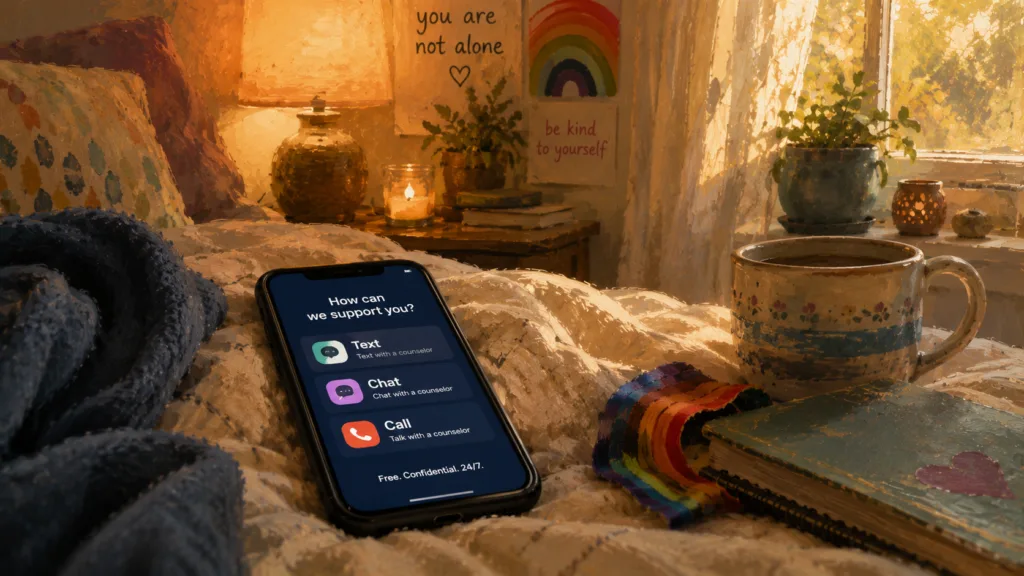
I felt calmer when I found The Trevor Project get help page. The page gave me clear choices before I had the right words. I saw text, chat, and phone support in one steady place. That simple layout made help feel closer.
I also felt relief because the support is free, confidential, and available 24/7. I did not need insurance, an appointment, or a perfect explanation. I could see that LGBTQ+ young people can reach trained crisis counselors in different ways. That choice felt kind and practical.
In this article
- The Trevor Project Help Options
- Private LGBTQ+ Crisis Support
- Support Beyond the Hotline
- How Donors Keep Help Available
I noticed how much comfort can come from plain language. The Trevor Project get help page does not make support feel complicated. It shows that someone can text START to 678-678, call 866-488-7386, or use TrevorChat online. I felt steadier because each option led toward care.
I also felt the importance of privacy right away. Confidential support can matter deeply for LGBTQ+ young people who feel unsure, isolated, or afraid to explain everything. The page made room for a person to begin with only what feels possible. That kind of care can make a first step feel safer.
How I Got Help from The Trevor Project
I found the strongest help in the way the page made the next step simple. A person in crisis may not have energy for a long process. The page gives clear options without asking for perfect readiness. I felt how a small choice can become a meaningful opening.
I also saw that support does not stop with one contact method. The Trevor Project includes crisis counseling, confidential support, peer connection, education, and donor-backed services. Each part helps make care feel more complete. I felt encouraged by a system that supports both urgent moments and ongoing connection.
The Trevor Project Help Options
I felt immediate relief when I saw three direct ways to reach support. TrevorText begins by sending START to 678-678. TrevorLifeline is available at 866-488-7386. TrevorChat is available online for private chat support.
That choice matters because each person may feel ready in a different way. A phone call can feel right for one person, while a text message may feel easier for another. A chat window can feel safer when privacy matters. I felt comfort in knowing there was no single correct way to begin.
I appreciated that each option connects a person with a trained counselor. The person reaching out can explain what is happening or begin with very few words. The counselor listens, responds, and helps the person focus on safety. I felt the care in that simple promise.
The page also helped because the actions were easy to see. Text, call, and chat all felt clear. In a hard moment, clarity can feel deeply grounding. I felt that The Trevor Project made support feel practical, close, and possible.
Private LGBTQ+ Crisis Support
I felt safer when I saw that The Trevor Project describes its crisis services as confidential. Privacy is not a small detail for many LGBTQ+ young people. It can shape whether someone reaches out or stays silent. I felt why confidential care can make support feel possible.
Confidential support allows a person to begin without first involving relatives, school staff, friends, or medical providers. It also allows someone to share only what feels manageable. That matters when identity, safety, fear, shame, or rejection may be part of the crisis. I felt warmth in support that does not ask for a full story before offering care.
I also value that The Trevor Project trains counselors to support LGBTQ+ young people. Identity, bullying, isolation, mental health, and safety can connect in personal ways. A person does not have to prove why those experiences matter. I felt comfort in support that begins with understanding.
The supplied content says half of LGBTQ+ young people who wanted mental health care in the past year could not get it. I felt the weight of that fact because immediate support can matter when ongoing care is out of reach. A crisis conversation may not replace long-term care. It can still help someone move through a painful moment with support.
Support Beyond the Hotline
I felt encouraged when I saw that The Trevor Project offers more than crisis contact information. The wider support system can help LGBTQ+ young people feel less alone. It can also help someone find words for feelings that once seemed hard to name. I felt the value of care that continues beyond one conversation.
TrevorSpace stood out to me as part of that support. It is a moderated online community for LGBTQ+ young people. Peer connection can matter when isolation continues after an urgent moment passes. I felt warmth in a space designed for young people to see shared questions, hopes, and experiences.
I also appreciated the educational resources connected with LGBTQ+ identity, mental health, family support, and suicide prevention. These materials can help someone prepare for a conversation or better understand personal feelings. Reliable language matters when confusion or misinformation feels close. I felt care in resources that support learning and connection.
This broader support made The Trevor Project feel like more than an emergency number. Crisis services can help in the hardest moments, while community and education can support the days around those moments. I felt that combination as steady and kind. Help can look like safety, language, connection, and continued care.
How Donors Keep Help Available
I felt grateful when I understood that 24/7 support depends on steady work behind the page. A phone number, text code, or chat button needs trained people and strong systems behind it. Counselors, technology, volunteer systems, safety planning, research, education, and operations all help keep care available. I felt how much support lives beneath the simple choices.
Donor support helps maintain the services young people see on The Trevor Project get help page. That includes TrevorLifeline, TrevorText, and TrevorChat. It also supports research, advocacy, education, and peer support programs. I find that meaningful because giving helps keep crisis options open.
The supplied content says that in fiscal year 2024, The Trevor Project directly served more than 450,000 crisis contacts through TrevorLifeline, TrevorChat, and TrevorText. I felt the importance of that number because each contact began with someone reaching toward help. Some people may have needed safety support, while others may have needed someone to listen. The structure behind those contacts is what donor support helps sustain.
I also appreciate that people can support the work in several ways. The supplied content names one-time gifts, recurring donations, fundraisers, commemorative gifts, corporate partnerships, and donor communities. Each option can help preserve access for LGBTQ+ young people who need private crisis support. I felt the result clearly: someone opens a page, chooses text, chat, or phone, and reaches a trained counselor.
FAQs
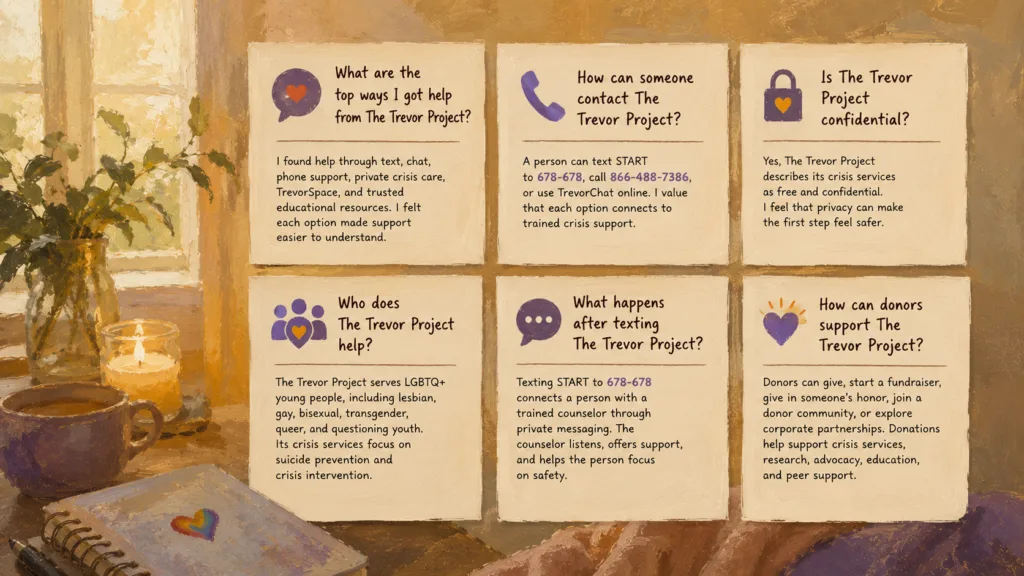
I found help through text, chat, phone support, private crisis care, TrevorSpace, and trusted educational resources. I felt each option made support easier to understand.
A person can text START to 678-678, call 866-488-7386, or use TrevorChat online. I value that each option connects to trained crisis support.
Yes, The Trevor Project describes its crisis services as free and confidential. I feel that privacy can make the first step feel safer.
The Trevor Project serves LGBTQ+ young people, including lesbian, gay, bisexual, transgender, queer, and questioning youth. Its crisis services focus on suicide prevention and crisis intervention.
Texting START to 678-678 connects a person with a trained counselor through private messaging. The counselor listens, offers support, and helps the person focus on safety.
Donors can give, start a fundraiser, give in someone’s honor, join a donor community, or explore corporate partnerships. Donations help support crisis services, research, advocacy, education, and peer support.
The Trevor Project Help Gave Me Hope
I feel encouraged by each gentle way someone can learn about The Trevor Project help options or support its donor-backed crisis care.
More on The Trevor Project
Explore The Trevor Project from every angle: