

You do not partner with The Trevor Project for a polished logo moment. You do it because LGBTQ+ young people face crisis, rejection, harassment, isolation, and systems that still fail them.
That reality should push you toward action. Not vague concern. Not performative branding. Real support.
The Trevor Project supports LGBTQ+ young people through crisis services, research, peer support, advocacy, education, and public awareness. That work needs funding, reach, labor, technical support, and people willing to move resources where they matter.
In this article
- Stop Treating Partnership Like Optics
- Bring Money, Reach, Or Real Capacity
- Prepare Before You Ask For Labor
- Help Now Without A Formal Deal
You need a clear support path before you contact The Trevor Project. Companies, foundations, schools, creators, community groups, and individual advocates can all help, but they cannot all help the same way.
Effective support starts with one direct action. Fund a program. Organize a campaign. Educate a community. Strengthen workplace giving. Support advocacy. Share reliable crisis resources.
Do not hide behind “awareness” when young people need care, safety, and accurate information now. Awareness without action becomes polished avoidance. LGBTQ+ young people do not need more institutions pretending to care while refusing to commit resources.
The question is not whether support sounds compassionate. The question is whether your support changes anything useful for people facing real risk.
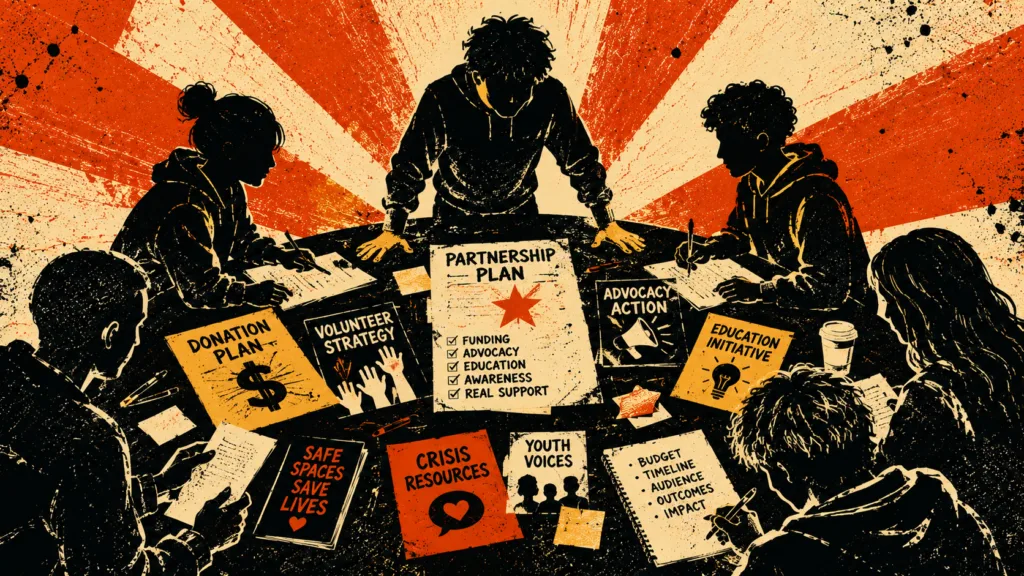
Partnership means action, not optics.
To partner with The Trevor Project means aligning support with LGBTQ+ youth suicide prevention. That support may connect to crisis intervention, peer support, research, advocacy, education, or public awareness. Every path should lead somewhere practical.
The Trevor Project’s partnership options can include corporate giving, institutional grants, employee engagement, product collaborations, public education, advocacy campaigns, fundraising, technical assistance, or community support. That flexibility helps serious supporters act. It also exposes people who only want visibility.
A strong partnership names the resource, audience, timeline, outcome, and responsibilities. General interest does not move the work. Clear commitment does.
Stop Treating Partnership Like Optics
You partner with The Trevor Project by connecting your support to LGBTQ+ youth suicide prevention. That means your support should strengthen crisis services, peer support, research, advocacy, education, or awareness in a direct way.
A company may fit a corporate partnership. A foundation or government funder may fit institutional grants. A school, club, or community group may begin with fundraising or education. Individual advocates can donate, organize campaigns, join advocacy alerts, sign up for updates, or share official resources.
Fit matters because the mission matters. A corporate giving program may help sustain crisis services. A public education effort may help adults stop harming young people through ignorance and misinformation. A foundation grant may support research, technology, or program growth.
Do not make nonprofit staff guess what you mean. Say what you offer, who it reaches, when it happens, and what it supports. If your proposal cannot answer those questions clearly, it is not ready.
Vague support wastes time. Worse, it treats LGBTQ+ young people like a public image strategy instead of people facing serious mental health risks. That is not partnership. That is branding disguised as concern.
Bring Money, Reach, Or Real Capacity
Companies can partner with The Trevor Project by bringing useful business resources to LGBTQ+ youth mental health and suicide prevention. That resource can be funding, technical support, employee engagement, public reach, education, or operational help. It cannot be empty rainbow messaging.
Corporate support may include direct funding, workplace giving, employee resource group engagement, public awareness campaigns, product collaborations, matching gifts, technical support, event sponsorship, or cause-related campaigns. The structure may vary. The standard cannot.
A retailer might run a product campaign with proceeds directed to The Trevor Project. A technology company might support digital infrastructure or crisis service tools. A workplace might connect employees to education sessions, fundraising, or advocacy actions.
The Trevor Project’s 2024 survey found that 50% of LGBTQ+ young people who wanted mental health care in the past year could not get it. That statistic should make corporate leaders uncomfortable. It should also expose how useless performative support becomes when young people still cannot access care.
A serious company proposal includes campaign dates, budget, donation structure, expected audience, marketing channels, legal review needs, employee engagement plans, and approval timelines. If public messaging or co-branding enters the work, companies need to follow nonprofit guidelines carefully.
Do not treat a suicide prevention mission like a seasonal marketing campaign. Young people dealing with crisis do not benefit from polished corporate language that never turns into meaningful support.
Prepare Before You Ask For Labor
Advocates should prepare a short partnership brief before contacting The Trevor Project. It does not need expensive design. It needs useful information.
Who is offering support? What action will happen? What resources exist? When will it happen? How does it connect to LGBTQ+ young people?
The first step is choosing the correct support path. Corporate supporters should use the corporate partnership route. Foundations and government funders should review institutional grant opportunities. Community groups may fit fundraising, public education, or advocacy better.
The second step is defining the action clearly. “We want to help” is not enough. Say the business will donate a percentage of sales during a set month. Say the student group will host a fundraiser. Say the employee resource group will organize workplace education.
The third step is identifying logistics before they become a problem. Include donation processing, event dates, audience size, accessibility needs, communication channels, reporting expectations, and approval requirements. Details protect the work from confusion and collapse.
Respect organizational capacity. Some opportunities, including crisis counseling, require formal training and may not always stay open. When one path becomes unavailable, supporters still have responsibility. They can raise funds, educate communities, support advocacy, and share accurate resources.
That is where serious support becomes obvious. People committed to the mission find another useful path. People chasing attention complain when the visible role disappears.
Help Now Without A Formal Deal
You do not need a formal agreement to support The Trevor Project. The organization already offers public ways to help, including donations, fundraising, advocacy alerts, public education, newsletter signups, and its resource center.
Support also happens in everyday spaces. LGBTQ+ young people need schools, workplaces, and communities that use correct names and pronouns, reject harassment, understand LGBTQ+ identities, and share reliable crisis resources. They need adults willing to interrupt misinformation instead of staying quiet.
The Trevor Project’s FY24 annual report states that 2,300 volunteers contributed nearly 112,000 hours of service. That number shows why structure matters. Crisis service roles require screening, training, supervision, and real organizational capacity.
When volunteer applications close or become limited, responsibility does not disappear. You can still raise money, educate your workplace, support advocacy, organize a fundraiser, or direct people toward official resources.
Independent action has to stay accurate and sustained. Sharing a crisis line during an emergency matters, but prevention starts earlier. Safer schools, informed workplaces, accurate information, and public support all reduce harm before crisis escalates.
Do not wait for a formal title before you decide to become useful. If you can move resources, attention, education, or support toward LGBTQ+ young people, start now.
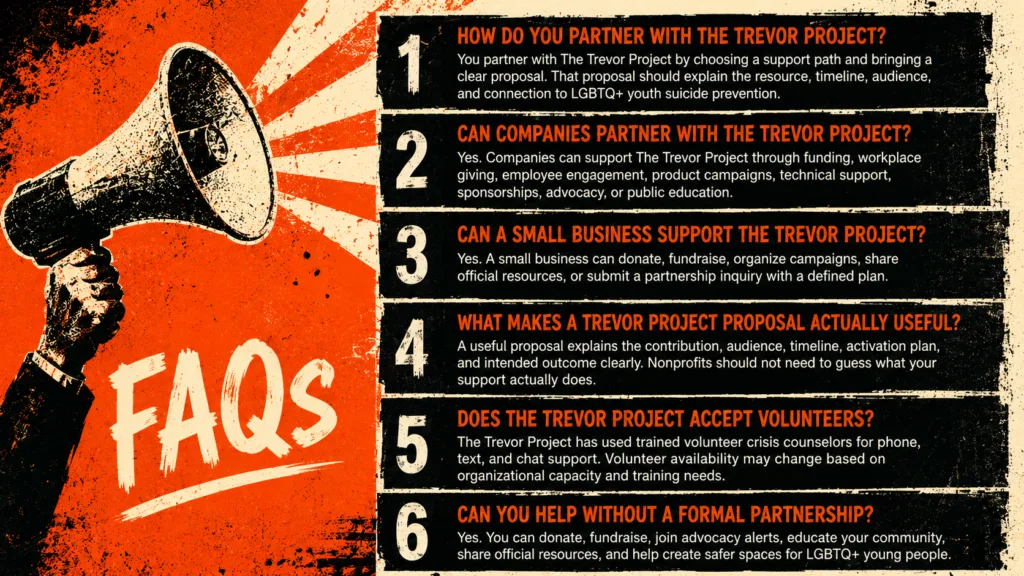
FAQs
You partner with The Trevor Project by choosing a support path and bringing a clear proposal. That proposal should explain the resource, timeline, audience, and connection to LGBTQ+ youth suicide prevention.
Yes. Companies can support The Trevor Project through funding, workplace giving, employee engagement, product campaigns, technical support, sponsorships, advocacy, or public education.
Yes. A small business can donate, fundraise, organize campaigns, share official resources, or submit a partnership inquiry with a defined plan.
A useful proposal explains the contribution, audience, timeline, activation plan, and intended outcome clearly. Nonprofits should not need to guess what your support actually does.
The Trevor Project has used trained volunteer crisis counselors for phone, text, and chat support. Volunteer availability may change based on organizational capacity and training needs.
Yes. You can donate, fundraise, join advocacy alerts, educate your community, share official resources, and help create safer spaces for LGBTQ+ young people.
Real Partnership Requires Real Commitment
A strong partnership with The Trevor Project starts with a clear commitment, not polished language. It identifies a real resource, connects that resource to LGBTQ+ youth suicide prevention, and explains how the effort will support young people directly.
Formal partnership is one path. It is not the only path. Donations, fundraising, advocacy, workplace engagement, education, and accurate resource sharing all matter when they move people toward safety and support.
LGBTQ+ young people do not need more institutions acting concerned while refusing to commit resources. They need people and organizations willing to prepare properly, respect the mission, and move support where it can actually reduce harm.
Visit The Trevor Project’s partner page, choose the support path that matches your real capacity, and prepare a clear one-page proposal before you reach out.
More on The Trevor Project
Explore The Trevor Project from every angle: