

Last Prisoner Project feels like a gentle place to begin when support still matters
I read Last Prisoner Project with a feeling of unfinished relief. I see a nonprofit whose purpose still feels meaningful because cannabis legalization did not erase every conviction, every term of supervision, or every barrier that follows a record. I also find comfort in the fact that its public support system gives people more than one path, even though those paths now feel more carefully limited than a broad mission statement might first suggest.
In this article
- I see Last Prisoner Project as a steady answer to harms that still linger.
- I feel the Last Prisoner Project support process is hopeful, though narrower than it first appears.
- I return to a few Last Prisoner Project resources because they feel clearest to me.
- I feel more at ease when Last Prisoner Project is one path among other caring options.
I begin this topic with a simple feeling: support matters most when it can actually be used. Last Prisoner Project describes a mission centered on repairing the harms of cannabis criminalization through legal intervention, constituent support, direct advocacy, and policy change, and I find that mission warm because it recognizes that legal change did not instantly bring emotional or practical repair. Records remain. Supervised release remains. The strain of rebuilding after incarceration still remains for many people.
I also notice that the organization’s current support pages ask for careful reading. I do not experience the site as one broad promise that fits every case. I experience it as a mix of general intake, narrower program rules, and legal screening tools for specific circumstances, and that makes clarity feel especially valuable. This guide stays close to the supplied material so the picture remains usable, grounded, and easy to carry forward.

I hold this Last Prisoner Project guide as a calm map rather than a distant overview.
I keep returning to one impression throughout this material: real help becomes easier to trust when the path is visible. Last Prisoner Project offers a meaningful entry point for cannabis-specific support, yet its current pages also show that eligibility and next steps can vary a great deal by program. I find the clearest way through by moving from identity, to support structure, to direct resources, and then to the wider alternatives that help when one organization cannot carry the whole need.
I see Last Prisoner Project as a steady answer to harms that still linger.
I read Last Prisoner Project as more than an advocacy brand. I experience it as a national, nonpartisan nonprofit devoted to cannabis criminal justice reform, and that description feels fuller the longer I sit with the source material. Its mission is not framed as release alone. It reaches toward legal intervention, constituent support, policy change, reentry help, and record relief, and I find that wider shape more human and more honest.
That wider shape matters because the harm of criminalization did not end at the moment a law changed. A conviction can keep affecting housing, employment, stability, and peace of mind long after a sentence appears to be over. Last Prisoner Project treats incarceration, criminal records, and reentry barriers as connected parts of the same story, and I feel a kind of steadiness in that recognition. It does not reduce the problem to one dramatic moment. It stays with the longer aftermath.
I also notice that the organization presents itself as a coalition that includes attorneys, advocates, criminal justice reformers, and justice-impacted individuals. That helps me understand why their work appears across several lanes at once. Some of it is direct service. Some of it is case screening or referral. Some of it is aimed at changing the policies and systems that decide who receives relief and who remains burdened.
When I gather those pieces together, the clearest description feels simple and warm. I see Last Prisoner Project living at the intersection of cannabis justice advocacy and practical post-conviction support. That makes it meaningful both for people seeking a larger reform vision and for people trying to find a concrete first step after incarceration, supervision, or the lingering weight of an old record.
I feel the Last Prisoner Project support process is hopeful, though narrower than it first appears.
I find the Constituent Services Intake Form the most reassuring starting point because it feels open without pretending to guarantee anything. The source says people can use it to request support such as reentry grants, record-clearance help, scholarship opportunities, or legal assistance. I appreciate that tone because it leaves room for possibility while still admitting that requests are reviewed under program guidelines. That kind of honesty feels kinder than a vague promise.
As I move deeper into the support pages, I notice that the reentry system is more limited than the broad mission language may first suggest. The reentry page describes financial and educational resources for formerly incarcerated constituents, including support for rebuilding after incarceration and movement toward employment in the legal cannabis industry. That language feels hopeful to me. Yet the stricter grant page adds a more selective reality, and I think that distinction matters a great deal.
The Reentry Support Fund page says that, effective January 2026, grant applications are open only to people who were approved for and enrolled in one of Last Prisoner Project’s legal or advocacy programs during incarceration and who are either still incarcerated or were released within the past year for cannabis. I do not read that as cold. I read it as a reminder that the current structure is specific, and that people may need to check fit carefully before leaning on this fund as their main option.
The source also places this support model inside a larger justice context. It notes that Black people are far more likely than White people to be arrested for marijuana possession, and I feel that fact quietly underneath the rest of the page. It helps explain why the organization’s work reaches beyond one grant track or one release effort. The underlying harm has been unequal for a long time, so the repair effort naturally appears in more than one form.
I also notice something encouraging in the same material. Even when the narrower reentry fund does not fit, other paths may still remain visible through legal screening, scholarship opportunities, or help tied to supervised release. That layered structure matters to me because a person does not always need the same thing. Sometimes the needed relief is financial. Sometimes it is legal. Sometimes it is simply a clearer route into the next stabilizing step.
For loved ones, the separate legal-help questionnaire feels especially important. It is designed for someone seeking legal help for another person, and the source lists criteria such as an offense that is primarily cannabis-related and or psilocybin, with no other drugs in the underlying offense, along with a current need tied to incarceration or ending supervised release. I find that page careful and practical. It gives form to concern without pretending every submission will become pro bono legal support.
I return to a few Last Prisoner Project resources because they feel clearest to me.
I keep returning to the Constituent Services Intake Form because it feels like the broadest and safest door into the organization. When the need is not yet perfectly defined, a general intake page can hold uncertainty more gently than a narrow application page. The source presents it as the place to begin for people exploring legal assistance, record relief, scholarship options, or reentry-related support. I value that breadth because many people arrive without a clean label for what they need.
The reentry page also feels useful to me, though in a different way. I read it less as a final application tool and more as an orientation space that explains how Last Prisoner Project talks about rebuilding after incarceration. It points toward support categories and employment-related pathways in the legal cannabis industry, and that gives the broader mission a practical tone. I find it helpful when I want the organization’s own framing before turning to stricter eligibility language.
The Reentry Support Fund page is the place where the current rules feel most visible. I appreciate it because it removes guesswork. The January 2026 limitation is stated there in a direct way, and that directness can spare people the discouraging experience of assuming a broader program still exists in the same form. The page also notes that family support grants to children or dependents are no longer offered through that application, which makes careful reading feel even more important.
The loved-ones legal questionnaire is another resource I would hold close. It feels especially useful when one person is trying to help another person move toward legal review. I find it practical because legal screening often depends on basic case details, and the source itself makes clear that information such as the sentencing court, case number, custody or release status, and a brief summary of the offense can help shape that first review.
I also find the public impact pages meaningful, even though they are not direct application tools. They help me understand the organization’s priorities across release, commutation, expungement, reentry, and policy change. The supplied material says Last Prisoner Project has saved more than 400 years of unjust prison time, cleared more than 250,000 cannabis offenses, and directed $3.8 million into the hands of people impacted by criminalization. I read those figures as signs of a sustained focus that can help a reader decide whether this is the right kind of organization to approach.
I feel more at ease when Last Prisoner Project is one path among other caring options.
I feel more grounded when I remember that Last Prisoner Project can be important without being the only answer. Some cannabis-specific cases may fit its present programs well, while others may need a different route because of jurisdiction, timing, eligibility, or the kind of relief being sought. That perspective softens the search for help. It turns one organization into part of a wider support map rather than a single all-or-nothing hope.
For federal convictions, the source points to the U.S. Department of Justice Office of the Pardon Attorney as the clearest official path for clemency applications. I find the distinction between pardon after completion of sentence and commutation during an active sentence especially meaningful because it gives the process a clearer emotional shape. Relief is not one thing. It depends on where a person stands, and the correct path can help the experience feel more coherent from the beginning.
For state-level record clearing, the Clean Slate Clearinghouse feels like a generous national starting point. Its state-by-state database, state selector, and lawyer finder bring structure to a process that can otherwise feel scattered. I appreciate that kind of structure because record relief varies so much across states. Expungement, sealing, dismissal, and similar remedies do not always carry the same name or the same rules, and a reliable starting point can ease that confusion.
The California-specific tools in the source also stand out to me because they feel especially usable. Clear My Record offers a nonprofit entry point for people with records in California counties, and the California Courts self-help page on marijuana conviction relief under Proposition 64 adds a more targeted path for marijuana-specific relief. I like these resources together because one feels like a welcoming place to start while the other feels like a direct explanation of a very specific remedy.
I also feel strongly that immediate reentry needs deserve just as much attention as the legal case itself. The source highlights 211 as a practical first move when housing, food, health care, counseling, utility help, or similar local services matter most. That lands deeply with me because daily stability often shapes whether any legal progress can actually hold. A person may need a safe place to sleep before any larger relief path feels emotionally reachable.
Employment support belongs in that same picture. The CareerOneStop reentry finder is presented as a way to locate local job, career, and training programs for people with criminal records, and I find that especially heartening. Work is not merely economic. It can support dignity, routine, and a stronger foundation for the rest of reentry. In that sense, employment help can quietly strengthen the same future that legal relief is trying to protect.
The practical takeaway feels calm and clear in my hands. I would use Last Prisoner Project when the case is cannabis-specific and appears to fit its current pathways, but I would not stop there when the fit is uncertain. A layered approach that includes one nonprofit intake, one official legal-relief channel, and one immediate-needs or employment resource feels steadier, more forgiving, and more likely to meet the full reality a person is living.
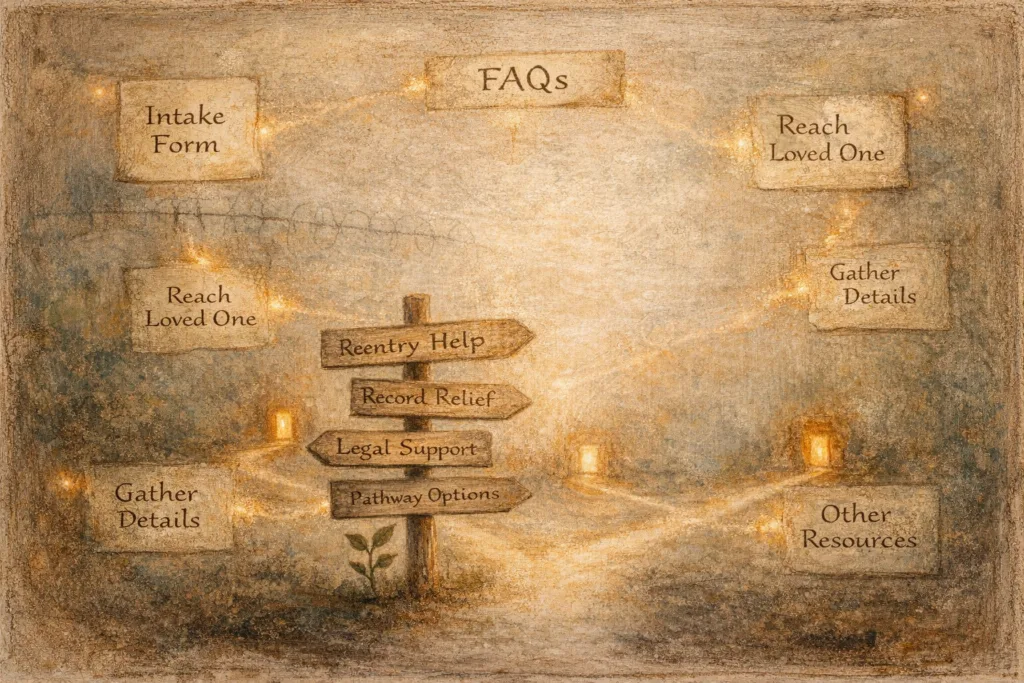
FAQs
I see Last Prisoner Project working across cannabis criminal justice reform, legal intervention, record relief, reentry support, advocacy, and policy change. I read it as both a reform organization and a practical entry point for some people seeking help.
I would begin with the Constituent Services Intake Form because it is presented as the broadest intake route. It feels like the gentlest first step when the need has not yet settled into one clear category.
I do not read it that way from the current source. The page says that, effective January 2026, the fund is limited to people who were enrolled in one of its legal or advocacy programs during incarceration and who are still incarcerated or were released within the past year for cannabis.
Yes, and that part of the site feels especially thoughtful to me. The loved-ones questionnaire is designed for that purpose, though the source also makes clear that completing it does not guarantee pro bono legal support.
I would hold onto the case number, sentencing court, judgment or docket information, release paperwork, and supervision status. Those details often make legal screening and support review feel more complete and more usable.
I would let the next step match the actual need. The source points toward DOJ clemency for federal cases, Clean Slate Clearinghouse for state record relief, 211 for urgent local support, and CareerOneStop for employment and training after release.
I come away from Last Prisoner Project feeling that clear pathways can make support feel real again.
I would start with the Last Prisoner Project intake path, then keep nearby the clemency, record-clearing, reentry, and employment resources that help the next step feel steadier.
- Last Prisoner Project Constituent Services Intake Form
- Last Prisoner Project Reentry
- Last Prisoner Project Reentry Support Fund
- Last Prisoner Project Loved-Ones Legal Questionnaire
- U.S. Department of Justice Office of the Pardon Attorney
- Clean Slate Clearinghouse
- Clean Slate State Search
- Clean Slate Find a Lawyer
- Clear My Record
- 211
- CareerOneStop Reentry Finder
More on The Last Prisoner Project
Explore The Last Prisoner Project from every angle: