

I come to financial abuse help with care, warmth, and steady attention. I see how money, work, debt, credit, records, and account access can shape safety in deeply personal ways. Financial abuse can feel confusing because it often appears inside ordinary daily routines. I value gentle language that helps make the pattern clearer.
I also hold FreeFrom’s work with real appreciation. FreeFrom centers survivor financial security before, during, and after crisis. That focus matters because leaving abuse can involve housing, childcare, food, transportation, phone access, healthcare, legal costs, lost wages, and credit. I see financial stability as part of safety, not a separate issue.
In this article
- What financial abuse can look like.
- Why money affects safety.
- How financial planning can help.
- Where financial abuse help begins.
I understand financial abuse as a pattern of control involving money, work, debt, credit, banking, transportation, documents, or financial information. It can happen slowly and quietly. A person may first offer to manage finances, then begin limiting choices, access, records, or income. That slow change can make the experience hard to name.
I see this article as a clear and warm guide to financial abuse help. It explains what financial abuse can look like, why money can make leaving harder, how preparation can support safety, and where survivor-centered resources can help. I keep the tone personal because this subject needs dignity, steadiness, and hope.

A Warm Guide to Financial Abuse Help
I see financial abuse as more than a financial problem. It can affect housing, employment, healthcare, transportation, childcare, records, phone access, and long-term independence. That wider view helps me understand why survivor support works best when it includes economic security. FreeFrom’s work feels meaningful because it treats financial stability as part of real safety.
I also see recovery as something that can happen in stages. Early support may focus on food, housing, communication, transportation, or safe access to money. Later support may include savings, credit repair, employment, benefits, legal help, or stable housing. That staged approach feels humane because it respects both immediate needs and future stability.
What financial abuse can look like.
I recognize financial abuse when money becomes a tool for control. It may involve income, employment, debt, credit, banking access, transportation, records, or basic necessities. The pattern can begin gradually, which can make it hard to identify. Clear language can bring relief and understanding.
I notice that financial abuse can include taking paychecks, restricting work, monitoring purchases, forcing debt, hiding information, or withholding money for essentials. It can also include opening accounts without consent, limiting transportation, damaging credit, or blocking access to documents. These details matter because they show how control can move through daily life. I find it helpful when each sign receives a clear name.
I also understand that financial abuse can continue after separation. Shared debt, unpaid bills, coerced loans, identity misuse, court costs, and damaged credit can follow a survivor into housing, utilities, childcare, employment, and healthcare. That long reach makes financial recovery central to safety. I appreciate that FreeFrom treats economic abuse as a core part of domestic violence.
I hold recognition as a steady first step. When financial control has been framed as budgeting, concern, protection, or household management, clear information can feel grounding. I value words that explain the pattern without shame. That is why financial abuse help can feel both practical and emotionally supportive.
Why money affects safety.
I understand leaving abuse as both a safety decision and a financial decision. A survivor may need emergency housing, food, transportation, childcare, legal support, medical care, a safe phone, or internet access. These needs can arrive while safety concerns are also increasing. That reality makes flexible support deeply important.
I feel the weight of the financial gap described in the source material. Survivors report needing an average of $1,567 to make ends meet and stay safe, while having only $10 in savings and less than $300 they alone can access. That contrast helps me understand why one direct expense can matter so much. A phone bill, car repair, hotel room, or security deposit can support safety.
I also see how employment disruption can create more pressure. Some survivors are prevented from working, while others lose income because of stalking, harassment, transportation limits, missed shifts, childcare instability, or interference. Safe work and stable income can become part of protection. I find that connection important because money and safety often meet in everyday moments.
Housing feels like another tender pressure point. Rental applications, utility accounts, mortgages, and loans often depend on credit history and steady income. Coerced debt, identity misuse, unpaid shared bills, and damaged credit can make independent housing harder to secure. I understand why survivor-centered support respects each person’s choice about which need matters first.
How financial planning can help.
I hold financial planning with care because privacy can affect safety. Phones, accounts, email, devices, banking apps, location data, or mail may be monitored. Many domestic violence organizations recommend speaking with an advocate before major financial or legal changes. That guidance feels steady because it honors both planning and protection.
I see a financial safety plan as a set of careful choices. It may include creating a private email account, changing passwords, gathering identification documents, saving financial records, reviewing account access, documenting debts, checking credit reports, or opening a separate account only when safe. Important records may include identification, insurance cards, pay stubs, tax records, court papers, lease agreements, bank statements, loan records, and benefit information. Each step can happen at a safe pace.
Technology safety also feels connected to financial safety. Shared devices, cloud accounts, phone plans, GPS tracking, payment apps, and banking notifications can expose private activity. A safer device, trusted mailing address, or advocate support may help before account changes. I value careful pacing because preparation should support safety.
Credit and debt review can bring helpful clarity. Financial abuse may involve coerced loans, unauthorized credit cards, unpaid bills, utility accounts, medical debt, or identity misuse. Reviewing credit reports can help identify unfamiliar accounts, collections, late payments, or debts that may need documentation. I see this as one grounded part of longer financial recovery.
Where financial abuse help begins.
I find financial abuse help in resources that respect survivor choice. FreeFrom offers survivor-focused support designed around financial security, including flexible cash assistance, savings support, coaching, financial education, and an online Resource Hub. These tools feel grounded because they address both crisis needs and long-term recovery. I appreciate support that allows each survivor to name the most important next expense.
FreeFrom’s Safety Fund offers flexible, no-strings-attached cash assistance that survivors can use based on their own needs. Those needs may include rent, utilities, car expenses, healing resources, or other safety-related costs. I see dignity in that flexibility because survivors know what supports stability. Trust can be an important part of meaningful support.
FreeFrom’s Savings Matching Program also feels hopeful. It helps survivors build emergency savings by matching savings dollar for dollar up to $55 each month, with a $120 bonus, for up to $1,440 over a year. That structure looks beyond crisis and toward future choice. I value support that makes room for stability, planning, and confidence.
I also hold the larger cost of survivorship with care. The source material notes that being a survivor costs an average of $104,000 in medical costs and lost productivity over a lifetime. That figure helps explain why short-term response cannot carry the whole need. Long-term financial abuse help can support credit recovery, savings, work stability, housing, education, and planning.
FAQs
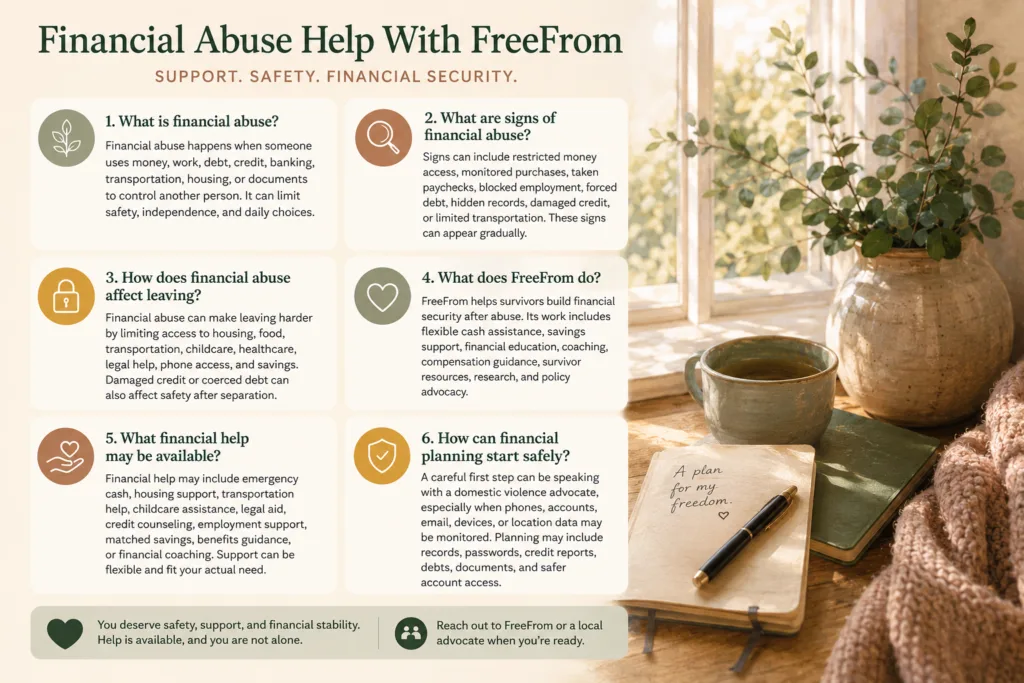
Financial abuse happens when someone uses money, work, debt, credit, banking, transportation, housing, or documents to control another person. It can limit safety, independence, and daily choices.
Signs can include restricted money access, monitored purchases, taken paychecks, blocked employment, forced debt, hidden records, damaged credit, or limited transportation. I find these signs important because they can appear gradually.
Financial abuse can make leaving harder by limiting access to housing, food, transportation, childcare, healthcare, legal help, phone access, and savings. Damaged credit or coerced debt can also affect safety after separation.
FreeFrom helps survivors build financial security after abuse. Its work includes flexible cash assistance, savings support, financial education, coaching, compensation guidance, survivor resources, research, and policy advocacy.
Financial help may include emergency cash, housing support, transportation help, childcare assistance, legal aid, credit counseling, employment support, matched savings, benefits guidance, or financial coaching. I value support that fits the survivor’s actual need.
A careful first step can be speaking with a domestic violence advocate, especially when phones, accounts, email, devices, or location data may be monitored. Planning may include records, passwords, credit reports, debts, documents, and safer account access.
Financial Abuse Help Can Support Safety
I warmly invite a visit to FreeFrom’s survivor resources for financial abuse help, recovery tools, savings support, and survivor-centered assistance.
More on FreeFrom
Explore FreeFrom from every angle: