

You do not help animals by worrying from the sidelines. You help when you take action with RedRover before disaster, violence, cruelty, and panic wreck people and animals. Concern is not enough. It never has been.
RedRover exists because crisis systems keep failing the humans and animals they should protect. Animals need trained responders, safe shelters, humane education, financial relief, and people who do not freeze when things get ugly. You need a role before the emergency hits. They need you prepared, not emotionally stirred and useless.
In this article
- How to Take Action with RedRover
- How RedRover Volunteer Training Works
- Why Pet-Friendly Shelters Matter
- How Humane Education Stops Cruelty
You already know animals suffer when humans build lazy, broken systems. You see it in disasters. You see it when survivors cannot leave abuse because no shelter will take their pets. You see it when children never learn that animals feel fear, pain, stress, and trust.
Taking action with RedRover means you stop treating compassion like a mood. You turn it into training, funding, outreach, education, and local pressure. You choose a lane and do the damn work. That is how concern becomes protection.
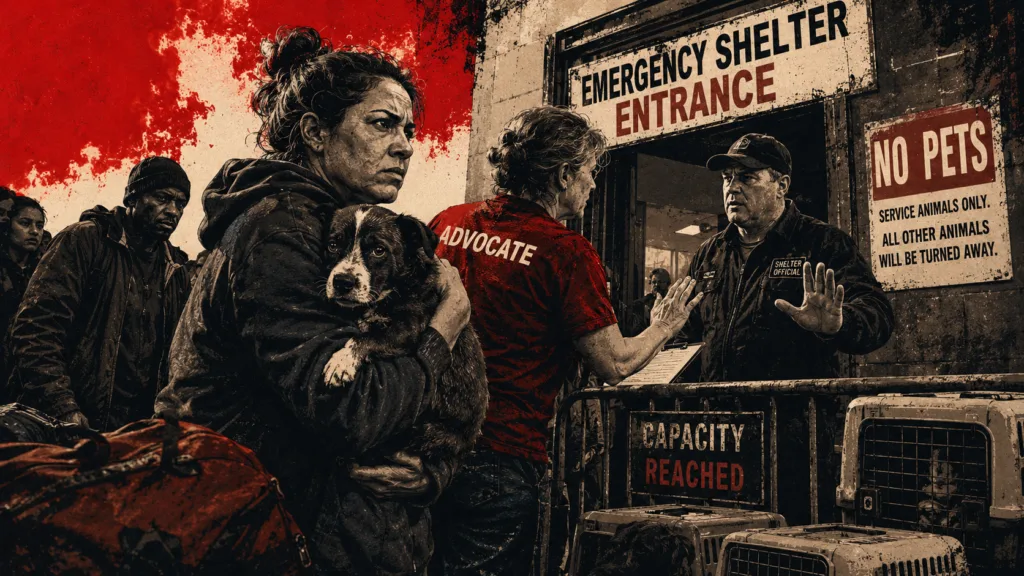
RedRover Action Turns Concern Into Protection
RedRover action gives you a way to stop circling the problem. You can train for emergency animal sheltering, support pet-inclusive crisis services, teach humane education, donate, organize supplies, or push local agencies to stop ignoring animals. Every path matters when crisis hits.
Animals do not need another passive audience. People in danger do not need another system that shrugs and says pets are complicated. They need humans who act early, prepare seriously, and refuse to let broken rules keep causing harm.
How to Take Action with RedRover
You take action with RedRover by choosing a real role. Not a vague intention. Not a soft promise. A role.
You can become a trained volunteer, support emergency response, donate funds or supplies, share crisis resources, help local shelters prepare, or bring humane education into youth spaces. Each option matters because animals and people in crisis need different kinds of help. They do not need everyone doing the same thing badly.
Hands-on advocates can prepare for emergency animal sheltering. Community advocates can push shelters, social service agencies, and animal welfare groups to include pets in crisis planning. Educators can teach children empathy before cruelty becomes normal. Supporters can fund the work that keeps programs moving when pressure rises.
This matters because crisis response does not work through panic. Animals displaced by disasters need trained humans. Survivors with pets need safety plans that do not punish them for refusing to abandon animals. Children need adults who teach compassion before harm hardens.
You do not need to do everything. You need to stop doing nothing. Pick one path, complete the preparation, and stay connected so your help can land fast when they need it.
How RedRover Volunteer Training Works
RedRover volunteer action starts with training because crisis is not a place for ego. Emergency animal response can include temporary sheltering, feeding, cleaning, documentation, logistics, animal care, and support under stress. That work can look simple from far away. Up close, it gets tense fast.
RedRover’s online responder training takes about two to three hours. That is not a huge ask. It is the line between wanting to help and being able to help without creating more damn problems.
Training teaches you how emergency sheltering works. Volunteers do not just show up and do whatever feels useful. They follow an organized response so animals receive safe care and responders can function. Structure is not bureaucracy when frightened animals depend on it. Structure is protection.
You should also build animal handling experience before crisis conditions raise the stakes. Local shelters and rescue groups can help you learn body language, kennel safety, cleaning routines, feeding flow, and stress reduction. Calm practice now helps prevent reckless mistakes later.
Not every trained person deploys immediately. Not every deployment fits your schedule or location. That does not make training pointless. It means trained humans exist before the call comes, and that is exactly the point.
Why Pet-Friendly Shelters Matter
Pet-friendly shelters matter because people and animals often face danger together. In domestic violence situations, pets may be threatened, harmed, or used as tools of control. When shelters cannot take animals, survivors face a cruel choice. Leave without the pet they protect, or stay close to danger.
That is not a minor shelter issue. That is a life-safety failure. Systems that ignore pets can trap humans and animals in harm, and pretending otherwise is cowardly.
Pet-inclusive crisis support needs planning. Shelters may need kennels, foster partners, veterinary relationships, cleaning protocols, staff training, pet supplies, emergency boarding, transportation, and intake procedures. Animal welfare groups and domestic violence agencies need to work together instead of leaving survivors stuck between systems.
You can ask your local organizations one direct question: what stops people and pets from finding safety together here? Maybe the answer is space, money, liability, staffing, allergies, behavior concerns, or missing policy. Fine. Name it. Then push the fix.
You can connect shelters with animal welfare partners, organize supplies, identify emergency boarding, share pet-safety resources, or support funding. This is not abstract advocacy. This is how you stop vulnerable humans from being forced to choose between their own safety and an animal they love.
How Humane Education Stops Cruelty
Emergency response matters after harm happens. Humane education fights harm before it spreads. Children need to learn that animals are feeling beings, not objects. That lesson is not cute. It is necessary.
RedRover Readers uses animal-themed literature to teach compassion, perspective-taking, and the human-animal bond. Children form attitudes toward animals early. If adults ignore that window, cruelty gets more room. If educators use it, empathy has a chance to take root before damage becomes normal.
RedRover Readers has reached 136,613 children to date. That number matters because it proves education can scale when people stop treating prevention like an afterthought. One educator can influence a classroom. One volunteer can support a library program. One community partner can bring humane education where nobody bothered before.
You can share RedRover Readers with schools, libraries, youth programs, and community groups. You can fund materials, encourage participation, or connect educators with tools. Do not wait until cruelty happens and then act shocked. Teach better before animals pay for adult neglect.
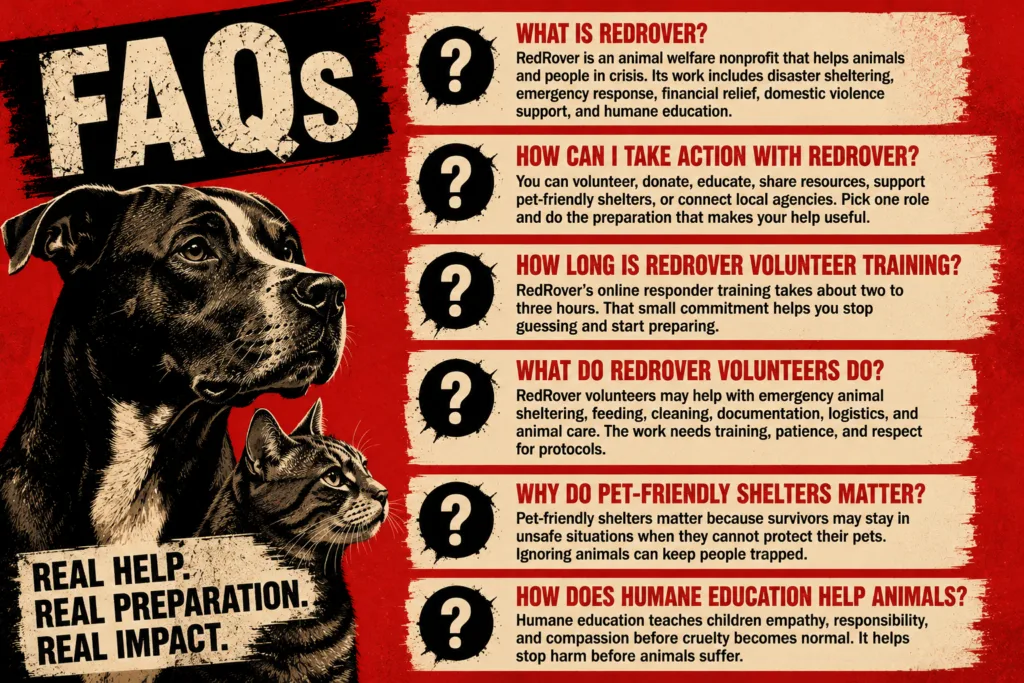
FAQs
RedRover is an animal welfare nonprofit that helps animals and people in crisis. Its work includes disaster sheltering, emergency response, financial relief, domestic violence support, and humane education.
You can volunteer, donate, educate, share resources, support pet-friendly shelters, or connect local agencies. Pick one role and do the preparation that makes your help useful.
RedRover’s online responder training takes about two to three hours. That small commitment helps you stop guessing and start preparing.
RedRover volunteers may help with emergency animal sheltering, feeding, cleaning, documentation, logistics, and animal care. The work needs training, patience, and respect for protocols.
Pet-friendly shelters matter because survivors may stay in unsafe situations when they cannot protect their pets. Ignoring animals can keep people trapped.
Humane education teaches children empathy, responsibility, and compassion before cruelty becomes normal. It helps stop harm before animals suffer.
Take RedRover Action Before Animals Pay
Choose one RedRover action path today and turn your concern into trained, organized protection.
More on RedRover
Explore RedRover from every angle: