
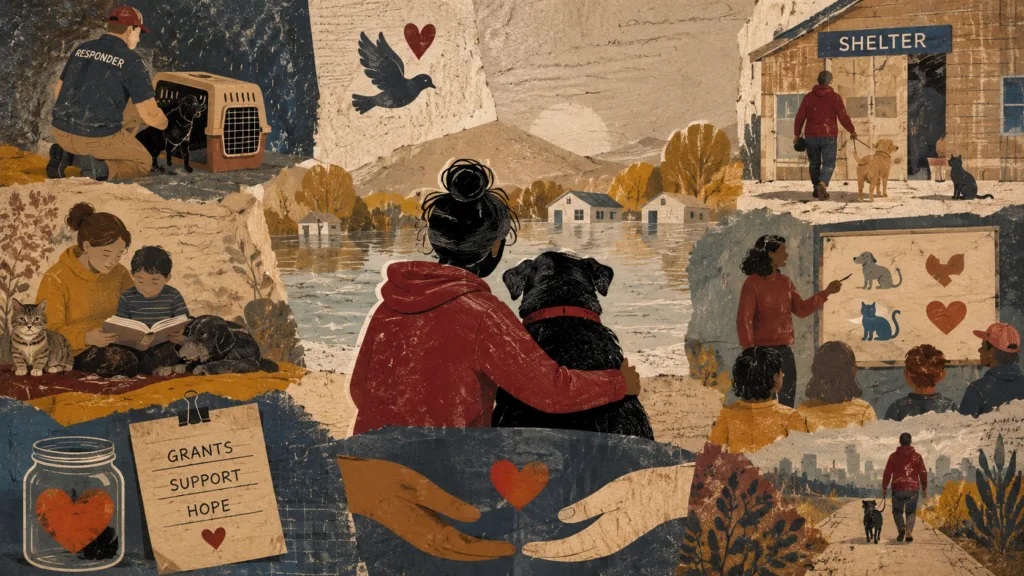
RedRover is a national animal welfare nonprofit that helps pets and people during crisis. Its work includes emergency animal sheltering, disaster response, veterinary financial assistance, domestic violence pet-safety programs, and humane education.
The organization matters because many animal emergencies also become family emergencies. A pet may need urgent care that a guardian cannot afford. A family may evacuate during a disaster and need a safe place for animals. A survivor of domestic violence may delay leaving because a shelter cannot accept a beloved pet. RedRover’s work grew around those real situations, where animals and people needed help together.
In this article
- What Is RedRover?
- How Does RedRover Help Pets?
- Why Does RedRover Help People Too?
- How Can Families And Communities Use RedRover?
For many families, a pet crisis had never been only about the animal. It had also involved money, housing, transportation, safety, and fear. A person who loved an animal often had to make fast decisions while feeling worried, isolated, or unsure where to turn.
RedRover helped explain how animal welfare and human support often overlapped. Its programs gave people more than sympathy. They offered grants, trained responders, sheltering support, education, and public resources.
That made RedRover useful for beginners to understand. It was not only a rescue organization, and it was not only a grant program. It worked across several kinds of crisis, with a shared belief that animals and people were often safest when support reached them together.
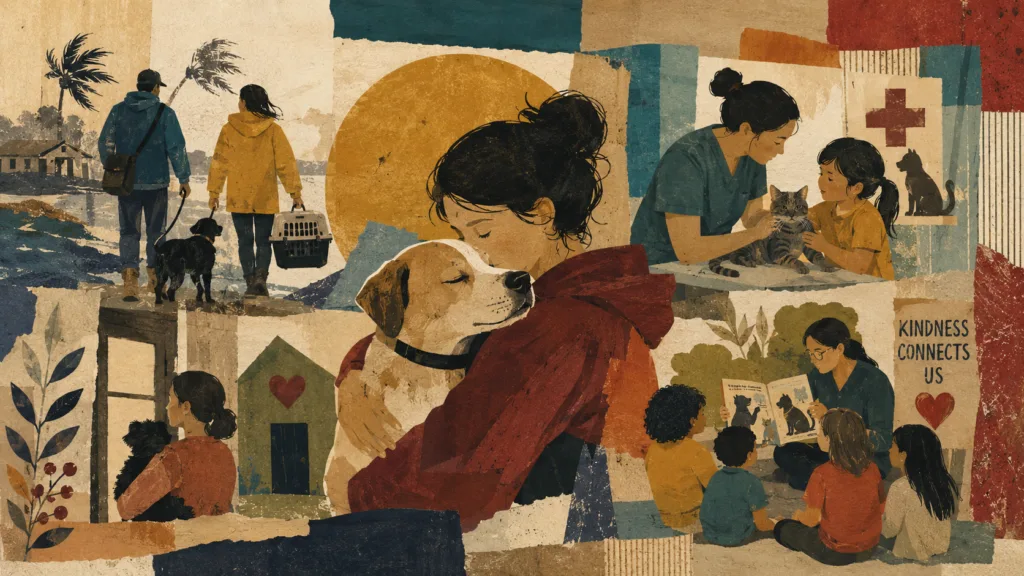
RedRover And The Crisis Care Story
RedRover began as United Animal Nations, a nonprofit founded by Belton P. Mouras. Its early mission focused on protecting animals and bringing people together for animal well-being. Over time, that work included animal cruelty issues, disaster-related animal needs, pet overpopulation, and humane treatment campaigns.
The organization later became widely known as RedRover. Public nonprofit records still listed United Animal Nations as the legal organization name, while RedRover became the operating name used by the organization. That history helped show how its work moved from broad animal protection into direct crisis support.
Across its programs, RedRover followed one clear idea. Animals in danger often belonged to people who were also under pressure. When a pet needed emergency care, when a disaster displaced a family, or when a survivor needed a safe shelter that allowed pets, animal care became part of a larger human story.
What Is RedRover?
RedRover is a national animal welfare nonprofit based in Sacramento, California. It helps animals in crisis and supports the bond between people and animals. Its programs focus on emergency sheltering, disaster relief, financial assistance, domestic violence pet safety, and education.
The easiest way to understand RedRover is to see it as a crisis support organization for pets and the people connected to them. A family may face a veterinary emergency. A community may need help sheltering animals after a disaster. A domestic violence shelter may need support so survivors can bring pets with them.
RedRover worked in those spaces because the need was often practical and emotional at the same time. A grant could help a pet receive care. A responder team could help animals after a disaster. A pet-friendly shelter could help a survivor leave danger without losing a companion animal.
That practical focus gave the organization its purpose. RedRover did not treat animal safety as separate from people’s lives. It recognized that pets often lived inside family systems, friendships, homes, schools, and communities.
How Does RedRover Help Pets?
RedRover helps pets through several main programs. RedRover Relief provides financial assistance, resources, training, and support to individuals and organizations. One part of that work is the Urgent Care grant program, which helps eligible pet guardians when an animal has a life-threatening medical need and financial hardship blocks care.
These grants were described as small amounts meant to close a gap. That detail mattered because many families did not need every problem solved at once. They needed one missing piece that could help an animal receive urgent treatment.
RedRover Responders provided another kind of help. This program supported emergency sheltering for animals displaced by natural disasters or rescued from cruelty situations. It also offered training, shelter operations support, animal handling guidance, and community assistance.
The Purple Leash Project added a different kind of animal crisis support. Created through a partnership between RedRover and Purina, it helped domestic violence shelters become more pet-friendly. The supplied material noted that only 19% of domestic violence shelters accepted pets, which showed why many survivors and advocates had faced a painful barrier.
Together, these programs showed how RedRover helped pets in different crisis settings. Some animals needed medical care. Some needed emergency shelter. Some needed safety because the person who loved them was trying to escape danger. In each case, RedRover’s work connected animal care with the human decisions around it.
Why Does RedRover Help People Too?
RedRover helped people because pets were often part of family life. A dog, cat, or other companion animal could shape how a person made decisions during hardship. When an animal was at risk, a guardian, parent, child, friend, or survivor often carried that worry too.
The human-animal bond appeared clearly in RedRover’s programs. In a veterinary emergency, a family might fear losing a pet because care cost too much. In a disaster, people might struggle to evacuate if animals had no safe place to go. In a domestic violence situation, a survivor might hesitate to leave if a pet could not come along.
RedRover Readers showed another side of that same bond. The program used animal-themed children’s books to encourage empathy, compassion, and thoughtful discussion about how people treated animals. This part of RedRover’s work focused on children, families, classrooms, and social learning before crisis arrived.
That education mattered because animal welfare was not only about emergency response. It was also about the values people learned together. When children talked about kindness toward animals, families and teachers helped build a wider culture of care.
RedRover’s people-focused work did not take attention away from animals. It helped explain why animal safety often depended on human systems. Shelters, families, schools, volunteers, advocates, and communities all played a role in whether an animal could be protected.
How Can Families And Communities Use RedRover?
Families and communities usually began with RedRover by identifying the kind of crisis involved. A pet guardian facing a life-threatening veterinary issue could review RedRover’s Urgent Care grant information. A survivor, advocate, or shelter worker could look at Safe Escape, Safe Housing, or Purple Leash Project resources.
Communities facing disaster or large-scale sheltering needs could look toward RedRover Responders. That program connected trained volunteers and sheltering knowledge with situations where animals had been displaced or rescued. For local groups, that support mattered because disaster response often depended on planning, coordination, and calm help.
People also supported RedRover in several ways. Some volunteered with RedRover Responders. Others donated, shared resources, helped shelters explore pet-friendly housing, or used RedRover Readers materials in educational settings.
The Purple Leash Project showed how support could turn into measurable shelter safety. Since 2019, Purple Leash Project grants helped create an estimated 282,825 safe nights for survivors and their pets, according to the supplied material. That number represented many families who had needed safety without leaving an animal behind.
Public records also helped readers understand RedRover beyond its mission story. ProPublica’s Nonprofit Explorer listed United Animal Nations, doing business as RedRover, and provided tax filings and summary financial data. For families, friends, advocates, and community groups, those records offered another way to see the organization’s structure.
FAQs
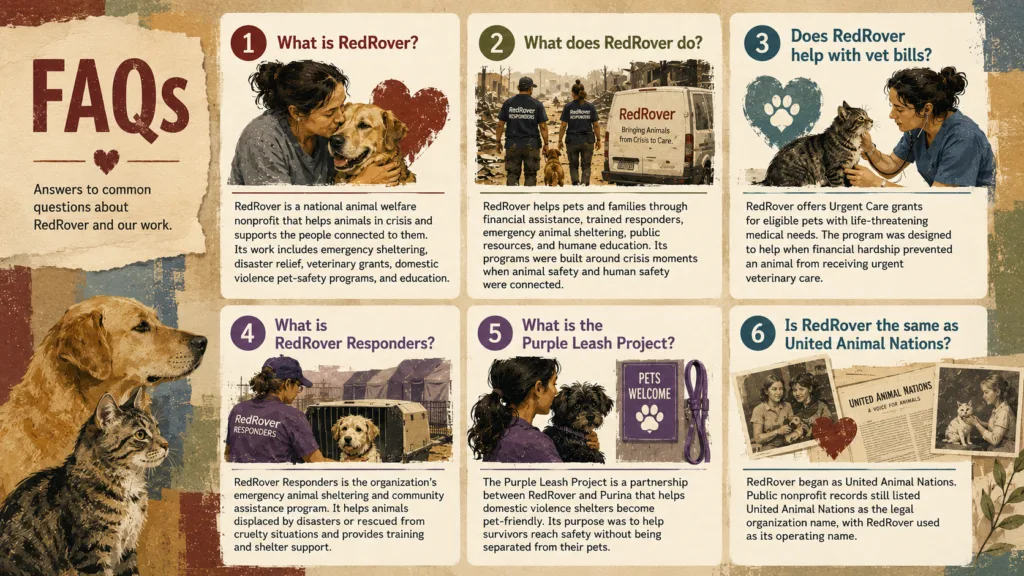
RedRover is a national animal welfare nonprofit that helps animals in crisis and supports the people connected to them. Its work includes emergency sheltering, disaster relief, veterinary grants, domestic violence pet-safety programs, and education.
RedRover helps pets and families through financial assistance, trained responders, emergency animal sheltering, public resources, and humane education. Its programs were built around crisis moments when animal safety and human safety were connected.
RedRover offers Urgent Care grants for eligible pets with life-threatening medical needs. The program was designed to help when financial hardship prevented an animal from receiving urgent veterinary care.
RedRover Responders is the organization’s emergency animal sheltering and community assistance program. It helps animals displaced by disasters or rescued from cruelty situations and provides training and shelter support.
The Purple Leash Project is a partnership between RedRover and Purina that helps domestic violence shelters become pet-friendly. Its purpose was to help survivors reach safety without being separated from their pets.
RedRover began as United Animal Nations. Public nonprofit records still listed United Animal Nations as the legal organization name, with RedRover used as its operating name.
RedRover Connects Animal Help With Human Crisis
RedRover matters because animal emergencies often affect entire families and communities. A pet’s surgery, a wildfire evacuation, a cruelty case, or a domestic violence escape plan could all depend on practical questions: where the animal could go, who could help, and whether support existed at the right time.
For beginners, RedRover was best understood as a crisis-to-care organization. Its programs combined direct aid, volunteer response, sheltering support, education, and public awareness. The shared idea was simple: animals and people often needed help together, and communities were stronger when that connection was recognized.
RedRover’s official resources and public records gave families, friends, shelters, and communities a steady place to begin when an animal crisis became part of human life.
More on RedRover
Explore RedRover from every angle: