
Autism Research Institute Resources for Real Answers
Autism Research Institute resources help you confront autism questions that too many systems still mishandle. You may need autism diagnosis information, adult autism resources, screening guidance, webinars, research updates, caregiver support, or late diagnosis material. ARI gives you a stronger place to start when vague answers, weak training, and delayed recognition are not good enough.
You may see early autism signs and feel the pressure of acting before they waste more time. You may be an adult recognizing sensory overload, burnout, masking, communication strain, routines, intense interests, or a possible late diagnosis. You may be a clinician, therapist, educator, or caregiver who needs better autism information because shallow understanding hurts real people.
This guide explains what the Autism Research Institute provides, how ARI resources support diagnosis questions, which webinars and education tools matter, and why ARI’s adult autism and autistic women resources deserve serious attention.
In this article
- What Autism Research Institute resources do when they dismiss real autism concerns.
- What ARI teaches you about autism signs before they waste more time.
- How ARI resources help caregivers and professionals stop failing people.
- Why ARI’s late diagnosis and autistic women resources expose a damn recognition problem.
ARI matters when a basic autism definition does not answer what you actually need to know. Autism can affect social communication, interaction, behavior, interests, routines, sensory processing, and support needs. People do not need another flat definition when they are dealing with school meetings, medical appointments, therapy decisions, work strain, burnout, or daily overload.
ARI does not diagnose autism, and you should not treat it like a diagnostic service. A formal autism diagnosis requires qualified professionals who review developmental history, current traits, communication patterns, co-occurring conditions, and clinical criteria. ARI helps you enter those conversations with better language, sharper questions, and less tolerance for vague dismissal.
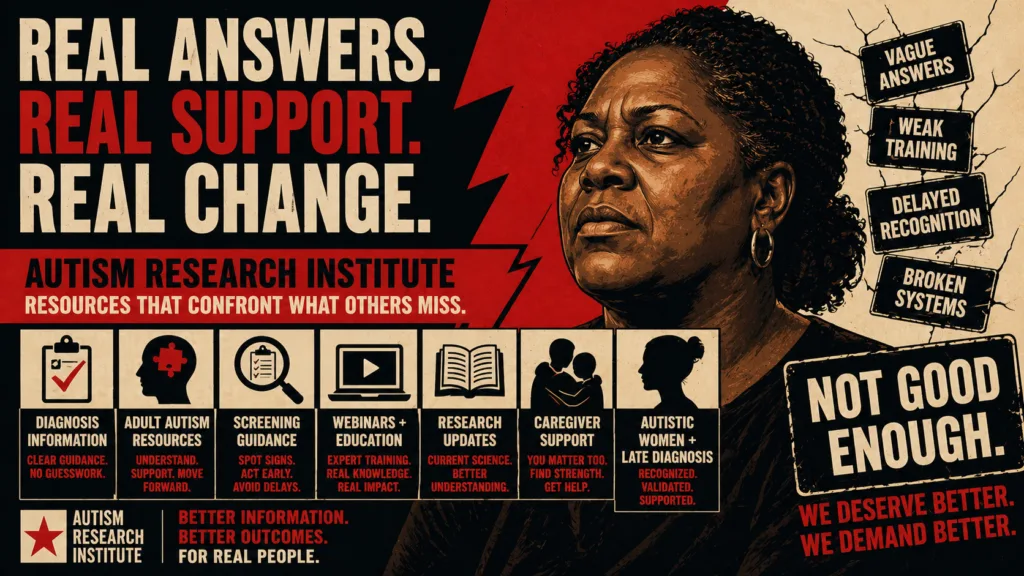
Autism Research Institute Resources Give You Leverage When Confusion Hurts People
The Autism Research Institute is a nonprofit organization focused on autism research funding and education. It provides autism education, research updates, webinars, diagnosis information, adult autism resources, caregiver materials, and professional education. That scope matters because autism support crosses healthcare, education, therapy, mental health, communication, sensory needs, and daily life.
When they misunderstand autism, they misread distress. They delay support. They treat real needs like behavior problems. ARI resources help you name patterns, understand evaluation pathways, and ask for support with more precision.
What Autism Research Institute resources do when they dismiss real autism concerns.
Autism Research Institute resources give you structured information about autism research, diagnosis, support, and lived experience. That structure matters when you are tired of scattered advice and empty reassurance. You need information that helps you move from concern to action.
Caregivers can use ARI to review early signs, screening, assessment, support needs, and educational resources. Autistic adults can use ARI to explore adult diagnosis, late recognition, quality of life, and support planning. Clinicians, therapists, and educators can use ARI webinars and research updates so they stop treating autism knowledge like optional background noise.
Autism is a spectrum, which means traits and support needs vary widely. That does not make autism vague. It means people need support based on what is actually happening, not stereotypes, outdated models, or lazy assumptions.
ARI does not replace professional evaluation. It prepares you for it. You still need qualified professionals for diagnosis, but you do not need to walk into that process unprepared while they control every question, every label, and every next step.
What ARI teaches you about autism signs before they waste more time.
ARI provides information on early signs, autism screening, diagnosis, adult autism, research updates, support, and treatment-related education. These resources help you understand when autism concerns deserve follow-up. They also help you stop waiting while unmet needs keep getting worse.
Autism signs can appear in early childhood. They may include delayed response to name, limited eye contact, social communication differences, repetitive movements, strong sensory reactions, intense interests, or difficulty with routine changes. These signs do not confirm autism by themselves, but they do justify a serious conversation with a pediatrician, psychologist, developmental specialist, or school evaluation team.
A diagnosis by an experienced professional can be considered reliable by age two. That fact should make delay harder to excuse. Early recognition can help people access evaluation, early intervention, communication support, occupational therapy, educational planning, and caregiver guidance.
Support must match the person. Some autistic people need speech and communication support. Others need sensory supports, school accommodations, mental health care, social understanding, independent living support, or help with co-occurring medical or behavioral concerns. Nobody gets helped by pretending one generic plan will fit every human.
ARI also provides treatment-related education. You should treat those materials as information, not individualized medical orders. Autism support may include speech-language therapy, occupational therapy, educational accommodations, behavioral supports, mental health care, communication tools, caregiver education, or care for co-occurring conditions.
How ARI resources help caregivers and professionals stop failing people.
ARI offers free webinars for autistic individuals, parents, educators, physicians, clinicians, therapists, and other professionals. Its webinar library includes research updates and topic-specific sessions on medical, behavioral, developmental, communication, and support-related issues. That matters because people get harmed when professionals treat autism like a side issue.
Caregivers can use ARI resources to prepare for appointments and planning decisions. Early-signs materials help you describe concerns clearly. Screening and assessment resources help you understand what evaluation may involve, so they cannot bury you under jargon and call that support.
Professionals can use ARI resources to improve care, communication, and decision-making. Autism-related needs often cross medicine, psychology, education, occupational therapy, speech-language pathology, mental health care, and caregiver support. Weak coordination creates confusion, and people pay for that confusion with stress, delay, and avoidable harm.
The most practical way to use ARI is to start with the current problem. Developmental concerns point to signs, screening, and assessment. Adult uncertainty points to adult diagnosis and late-diagnosis resources. Caregiver strain points to webinars and support materials. Professional knowledge gaps point to webinars and research updates.
Why ARI’s late diagnosis and autistic women resources expose a damn recognition problem.
ARI includes resources on adult autism, late diagnosis, gender differences, and autistic women. These topics matter because many autistic adults were not diagnosed in childhood. Some were misdiagnosed. Others masked autistic traits, built coping strategies, or got evaluated for anxiety, depression, ADHD, mood disorders, or personality-related concerns before autism was even considered.
Adult autism diagnosis can help people understand lifelong patterns in communication, sensory processing, social exhaustion, burnout, routines, intense interests, work demands, relationships, and daily functioning. A late diagnosis can clarify support needs and reduce shame people never should have carried. You are not the problem because they failed to recognize the pattern.
ARI’s resources on autistic women address delayed diagnosis, missed diagnosis, gender bias, masking, and the history of autism research. Older autism models were shaped largely around male presentations. That narrowed what professionals recognized and helped leave girls and women unseen.
Autistic girls and women may show traits in ways that are more internalized, more socially camouflaged, or less expected. That does not make their autism less real. It exposes a recognition failure that affected who got support and who got ignored.
A 2026 BMJ study followed nearly three million children and found that autism diagnosis rates for males and females may be nearly equal by adulthood. That finding matters because it suggests lower childhood diagnosis rates in girls may reflect recognition problems, not simply lower occurrence. They did not just miss details. They missed people.
ARI’s women and autism resources help you prepare questions about masking, burnout, sensory differences, mental health history, social expectations, and adult assessment. That information matters when you need to challenge a narrow view of autism that still causes damage.
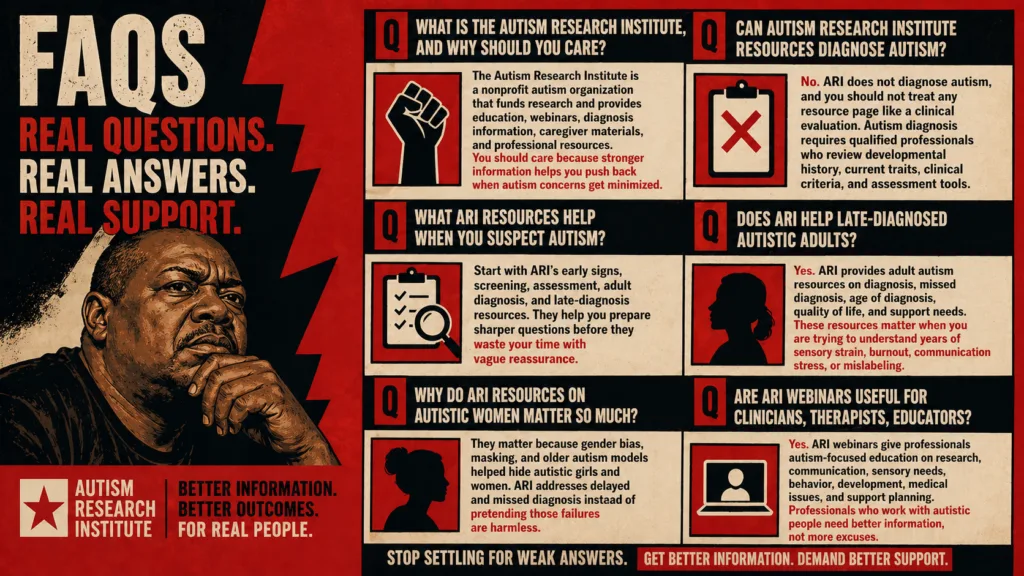
FAQs
The Autism Research Institute is a nonprofit autism organization that funds research and provides education, webinars, diagnosis information, caregiver materials, and professional resources. You should care because stronger information helps you push back when autism concerns get minimized.
No. ARI does not diagnose autism, and you should not treat any resource page like a clinical evaluation. Autism diagnosis requires qualified professionals who review developmental history, current traits, clinical criteria, and assessment tools.
Start with ARI’s early signs, screening, assessment, adult diagnosis, and late-diagnosis resources. They help you prepare sharper questions before they waste your time with vague reassurance.
Yes. ARI provides adult autism resources on diagnosis, missed diagnosis, age of diagnosis, quality of life, and support needs. These resources matter when you are trying to understand years of sensory strain, burnout, communication stress, or mislabeling.
They matter because gender bias, masking, and older autism models helped hide autistic girls and women. ARI addresses delayed and missed diagnosis instead of pretending those failures are harmless.
Yes. ARI webinars give professionals autism-focused education on research, communication, sensory needs, behavior, development, medical issues, and support planning. Professionals who work with autistic people need better information, not more excuses.
Autism Research Institute Resources Help You Challenge Weak Answers and Demand Better Support
Start with the ARI resource that matches your concern, then use it to ask sharper questions and push harder for support that actually fits.
More on Autism Research Institute
Explore Autism Research Institute from every angle: