
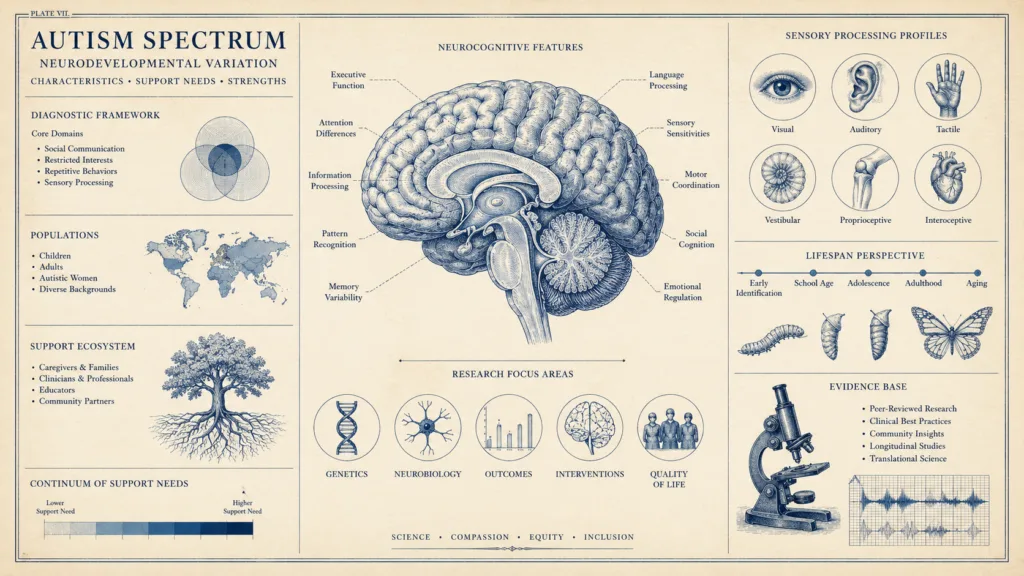
Autism Research Institute Resources: Diagnosis, Webinars, and Support
Autism Research Institute resources provide autism education, research updates, webinars, diagnosis information, and support materials. ARI functions as a nonprofit autism organization focused on research advancement and public education.
Autism information often requires more than a basic definition. Screening, diagnosis, adult autism, autistic women, sensory needs, communication differences, co-occurring conditions, and support planning all require clear resource pathways.
In this article
- Autism Research Institute resource overview.
- Autism diagnosis and support information.
- ARI webinars and professional education.
- Adult autism, late diagnosis, and autistic women.
Autism Research Institute resources support autism learning across several needs. Early developmental concerns require signs, screening, assessment, and professional evaluation information. Adult autism questions require resources on late diagnosis, masking, sensory patterns, burnout, and daily support needs.
ARI also provides webinars and research updates for clinicians, therapists, educators, caregivers, and researchers. These materials organize autism information across medical, developmental, behavioral, sensory, communication, and support topics.
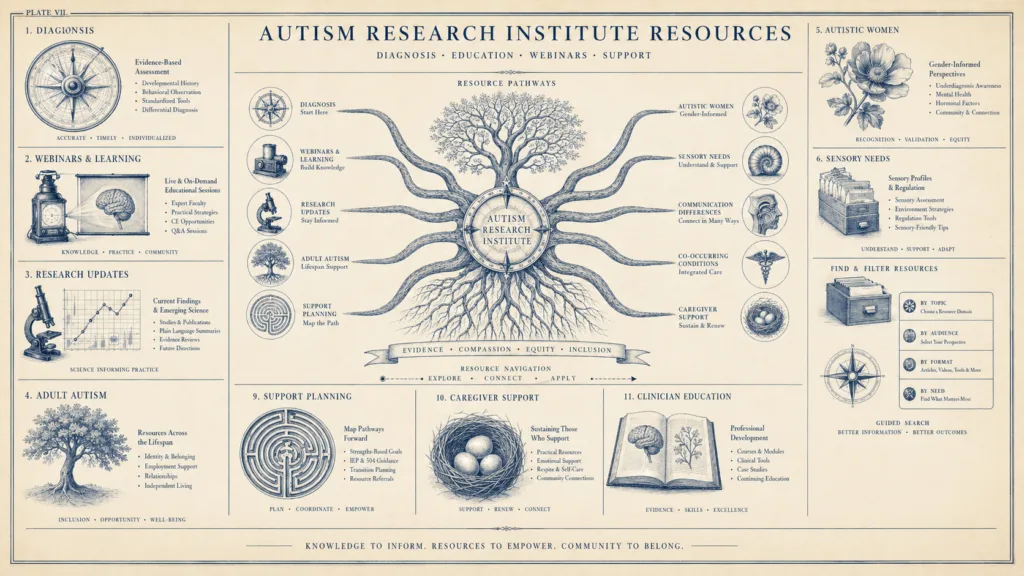
Autism Research Institute resources for autism education.
Autism Research Institute resources include education materials, research updates, webinars, adult diagnosis information, and support content. ARI describes autism as a developmental disability involving brain-based differences in communication, interaction, behavior, interests, routines, sensory processing, and support needs.
Autism remains a spectrum because traits and support needs vary across profiles. ARI provides education and resource pathways, not clinical diagnosis. Formal autism diagnosis requires qualified professional evaluation.
Autism Research Institute resource overview.
The Autism Research Institute is a nonprofit autism organization focused on research and education. ARI supports public autism understanding through educational resources, webinars, research updates, and topic-specific information.
ARI resources serve several information categories. Autism diagnosis, screening, early signs, adult autism, caregiver support, clinician education, and research developments appear across its resource structure.
ARI does not diagnose autism. Its role centers on education, research communication, and preparation for informed clinical, educational, or support planning conversations.
Autism diagnosis and support information.
ARI provides autism information on early signs, screening, diagnosis, adult autism, support, treatment education, webinars, and research updates. These materials explain common autism traits and possible next steps.
Early autism signs can include delayed response to name, limited eye contact, communication differences, repetitive movements, sensory reactivity, intense interests, and difficulty with routine changes. These signs do not confirm autism by themselves, but can support discussion with qualified professionals.
A reliable autism diagnosis by an experienced professional can occur by age two. Early recognition can support access to evaluation, intervention, communication support, occupational therapy, educational planning, and caregiver guidance.
Autism support depends on individual needs. Support may include speech-language therapy, occupational therapy, educational accommodations, behavioral supports, mental health care, communication tools, family education, and care for co-occurring conditions.
ARI webinars and professional education.
ARI webinars provide autism education for autistic adults, caregivers, educators, physicians, clinicians, therapists, and other professionals. The webinar library includes research updates and sessions on medical, behavioral, developmental, communication, and support topics.
Families and caregivers can use ARI resources to organize next steps. Early-sign materials support appointment preparation, while screening and assessment resources explain evaluation concepts.
Clinicians, therapists, and educators can use ARI resources for autism-focused learning. Autism-related needs often involve medicine, psychology, education, occupational therapy, speech-language pathology, mental health care, and caregiver support.
Resource selection works best by topic. Developmental concerns align with signs, screening, and assessment. Adult diagnosis questions align with adult autism and late-diagnosis resources. Professional learning aligns with webinars and research updates.
Adult autism, late diagnosis, and autistic women.
ARI includes resources on adult autism, late diagnosis, gender differences, and autistic women. These topics address missed diagnosis, masking, gender bias, mental health history, and changing autism recognition.
Adult autism diagnosis may become relevant after lifelong sensory differences, communication patterns, burnout, routines, intense interests, social exhaustion, or daily-demand difficulties. Late diagnosis can clarify support needs and earlier unexplained patterns.
Autistic women resources address delayed and missed diagnosis. Older autism models centered male presentations, which affected recognition among girls and women. Female autism traits may appear more internalized, camouflaged, or unexpected within older diagnostic assumptions.
A twenty twenty-six BMJ study followed nearly three million children and found male and female autism diagnosis rates may become nearly equal by adulthood. This finding supports the importance of adult autism resources, gender-informed assessment, and late-diagnosis education.
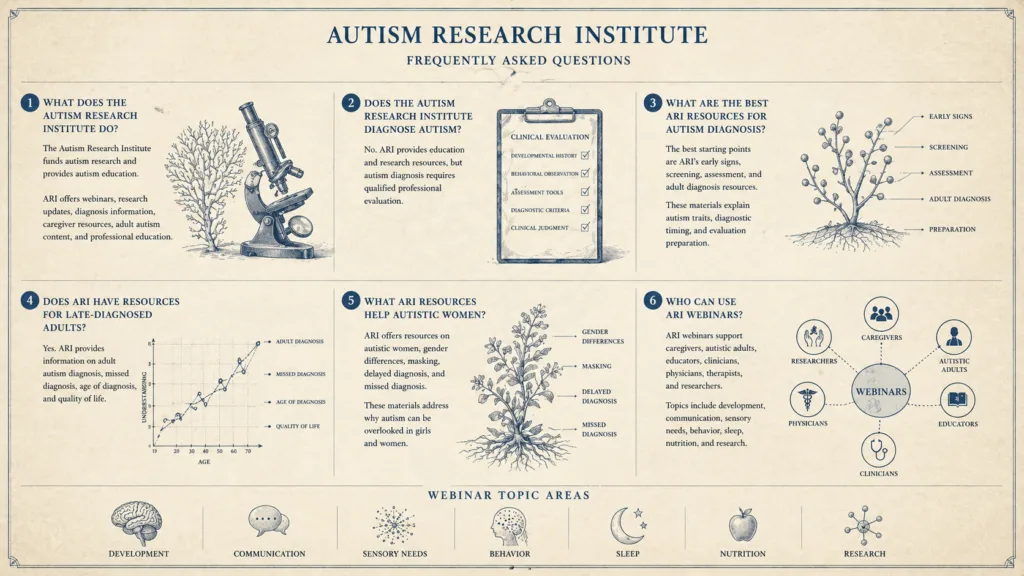
FAQs
The Autism Research Institute funds autism research and provides autism education. ARI offers webinars, research updates, diagnosis information, caregiver resources, adult autism content, and professional education.
No. ARI provides education and research resources, but autism diagnosis requires qualified professional evaluation.
The best starting points are ARI’s early signs, screening, assessment, and adult diagnosis resources. These materials explain autism traits, diagnostic timing, and evaluation preparation.
Yes. ARI provides information on adult autism diagnosis, missed diagnosis, age of diagnosis, and quality of life.
ARI offers resources on autistic women, gender differences, masking, delayed diagnosis, and missed diagnosis. These materials address why autism can be overlooked in girls and women.
ARI webinars support caregivers, autistic adults, educators, clinicians, physicians, therapists, and researchers. Topics include development, communication, sensory needs, behavior, sleep, nutrition, and research.
Autism Research Institute resources support informed autism learning.
Start with the Autism Research Institute resource category matching the current topic: diagnosis, webinars, adult autism, autistic women, caregiver support, clinician education, or research updates.
More on Autism Research Institute
Explore Autism Research Institute from every angle: