
World Resources Institute: The Tools You Need When Systems Fail
You do not need another polished environmental institution that talks in circles while people absorb the cost. The World Resources Institute matters because it does the hard damn work of turning sprawling climate, water, forest, energy, food, and city failures into public evidence you can actually use. When systems crack, humans pay first. WRI does not hide that behind soft language, and that is exactly why its work lands.
Most institutions lose people by splitting connected crises into neat categories that feel manageable and false. Water stress does not stay in a water box. Forest loss does not stay in a forest box. City design does not stay in a planning box. These failures bleed into crops, health, livelihoods, heat, transport, air quality, and economic pressure, and pretending otherwise keeps people exposed.
That is where the World Resources Institute becomes more than another research brand. Its mission ties together meeting people’s essential needs, protecting and restoring nature, and stabilizing the climate while building resilient communities. That framing matters because the damage is already connected. WRI makes those connections visible, public, and harder for anyone to dodge.
In this article
- Why the World Resources Institute refuses the silo nonsense that keeps people stuck
- Where the World Resources Institute drags the real damage into the light
- The World Resources Institute tools that stop you guessing and start showing you proof
- Why the World Resources Institute matters when bad decisions keep hitting real people
The usual institutional failure is not a lack of reports. It is the refusal to make those reports usable when pressure is already hitting people now. You get abstract language, scattered categories, and safe distance while water shortages cut into crops, forests fall, and cities trap humans in heat, pollution, and brittle infrastructure. That is not a neutral mistake. It is a system failure that keeps evidence out of reach.
The World Resources Institute pushes against that failure by refusing to treat linked crises like isolated departments. Its work is built around the fact that water shortages affect crops, health, and energy systems. Forest loss affects biodiversity, livelihoods, and carbon storage. City design shapes transport, air quality, heat exposure, and economic opportunity. Those are not side notes. They are the real-world consequences people carry when institutions fragment what is clearly connected.
This is why WRI stays useful beyond specialist circles. It does not only publish research. It builds public tools, usable data, and practical applications that make pressure visible. That matters for journalists, teachers, students, planners, and nonprofit teams who do not have time for expensive data silos or another vague explanation that tells them nothing they can use next.
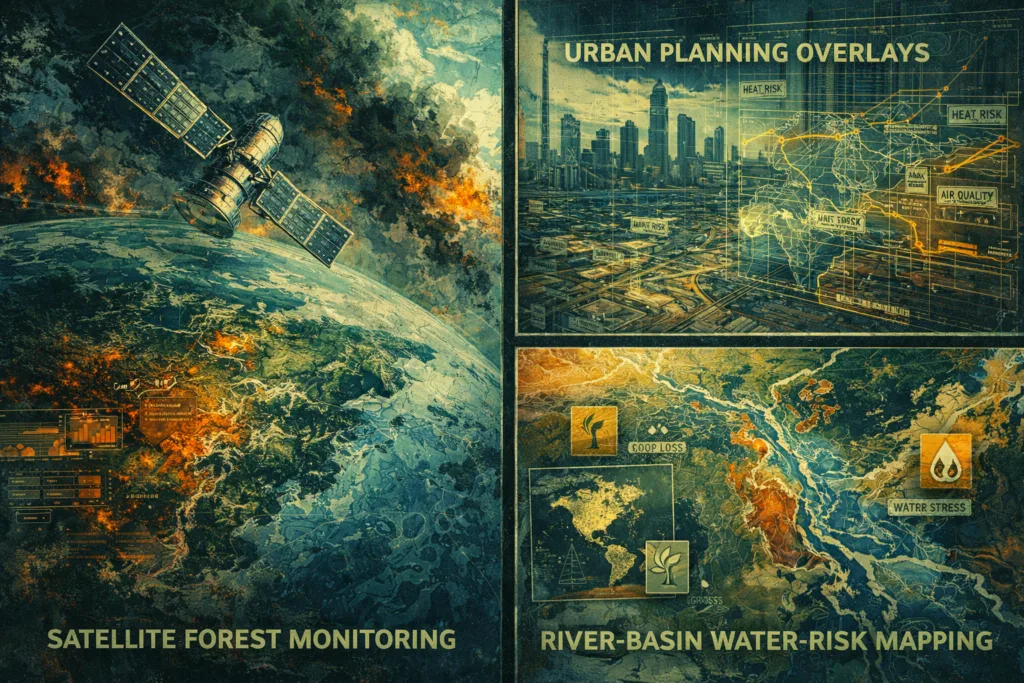
The World Resources Institute matters because it makes systemic environmental failure visible before more people get trapped under it
Too many organizations stop at awareness, and awareness without tools is a dead end. The World Resources Institute takes research, turns it into public evidence, and puts it where people can actually use it. That changes the power dynamic fast. You are no longer stuck with concern and no leverage. You can see where the pressure sits, how systems collide, and why bad decisions keep making the damage worse.
Why the World Resources Institute refuses the silo nonsense that keeps people stuck
The World Resources Institute stands out because it does more than publish findings and disappear behind institutional polish. It produces data, builds public tools, supports decision-makers, and works across the systems shaping daily life. Its strategic plan makes that plain: real progress depends on changing the systems that most directly affect people, nature, and climate, especially food, land and water, energy, and cities. That matters because silo thinking does not solve linked damage. It protects confusion.
That systems view gives WRI unusual reach without making its work feel scattered. It can move from drought risk to forest monitoring, urban planning, clean energy, and climate governance because those problems already collide in the real world. A hotter city does not only need lower emissions. It needs resilient infrastructure, cleaner transport, and choices that stop trapping humans in avoidable heat and polluted air.
Access is another reason WRI stays useful while other institutions feel closed off and performative. The organization says its datasets, applications, and data infrastructure are freely available under its Open Data Commitment. That matters because expensive private data locks people out, and locked evidence always helps the wrong people most. When teachers, journalists, planners, nonprofit teams, and students can use the same underlying resources, the gatekeeping starts to crack.
WRI also frames itself as a practical change partner, not just a research institution speaking from a safe height. Its strategy emphasizes research-based approaches, global and country-level work, and helping deliver transitions for people, nature, and climate. That combination matters because evidence without application leaves people informed and stranded. WRI’s value comes from refusing that useless split.
Where the World Resources Institute drags the real damage into the light
One of WRI’s clearest strengths is making large environmental risks impossible to brush off as technical noise. Water is the bluntest example. According to WRI’s Aqueduct work, 25 countries, home to one-quarter of the world’s population, face extremely high water stress each year. That is not a niche metric for policy people. That is a direct warning about human vulnerability at scale.
Its forest work hits with the same force. Through Global Forest Watch and related analysis, WRI helps users see where forest change is happening and why it matters. In 2024, the tropics lost 6.7 million hectares of primary forest, equal to 18 football pitches a minute. That number does not let anyone hide behind passive language. It shows speed, scale, and the brutal pace of loss in terms humans can actually feel.
Its work on cities and systems makes the same point from another angle. WRI argues that real progress depends on getting transitions right in food and land, energy, and cities. That means climate is not treated as a narrow emissions problem. It is tied to housing, mobility, resilience, jobs, public services, and the broader design of daily life. When institutions split those issues apart, they make failure easier to manage on paper and harder to survive in reality.
This is why WRI stays broadly useful. It gives readers a way to understand environmental pressure not as a distant issue, but as a force shaping food supplies, urban heat, water access, forest security, and long-term resilience now. The value is not just that WRI studies connections. It makes those connections visible before more damage gets normalized.
The World Resources Institute tools that stop you guessing and start showing you proof
Aqueduct is one of WRI’s strongest public tools because vague concern about water is not enough when water stress, drought, and flooding keep escalating. It uses open-source, peer-reviewed data to map those risks, and the latest version offers higher-resolution indicators. That matters because place-based evidence changes the conversation. Planners, companies, researchers, and journalists do not have to gesture at fear. They can see the pressure and compare what is happening in specific places.
Global Forest Watch does the same kind of work for forest loss, and that makes it hard to ignore. WRI presents it as a platform for monitoring forest change through satellite data and related technologies, giving users current information about loss and pressure in forested areas. That makes it valuable not only for conservation groups, but for governments, communities, supply-chain actors, and reporters trying to track land-use change before more damage disappears into delay and denial.
Resource Watch fills another gap that institutions often leave open on purpose. Organized by WRI and more than 30 partners, it lets users explore over 200 datasets on climate change, migration, air quality, agriculture, energy, and more. That matters because real-world crises do not arrive one at a time. They overlap, reinforce each other, and hit humans through multiple systems at once. A tool that lets you layer those pressures is not optional. It is necessary.
The common thread across these platforms is simple: they lower the barrier to understanding. Instead of forcing people through scattered databases and technical papers, WRI packages information into tools that can be searched, mapped, layered, and applied. That is a major reason its work stays useful outside specialist circles. These tools do not waste your time. They give you evidence you can use.
Why the World Resources Institute matters when bad decisions keep hitting real people
The World Resources Institute matters because large, complex problems get even more dangerous when evidence stays inaccessible. Water risk becomes easier to address when it is mapped clearly. Forest loss becomes harder to ignore when monitoring makes the speed of change visible in near real time. Climate and urban challenges stop feeling abstract when they are tied directly to transport, buildings, heat, land, and public infrastructure.
Its open-data model matters for the same reason. WRI states that good data is the foundation of good decision-making, and it makes that data infrastructure freely available. That widens access to credible evidence and lets a much broader group of people work from the same factual base. A teacher can use a map in class. A journalist can anchor a story in a public dataset. A city team can compare risks before locking in choices that people will pay for later.
WRI’s influence also comes from how it connects sectors instead of chasing isolated wins that look clean and solve little. Its strategy is built around shifting systems and helping institutions navigate transitions that work for people as well as the planet. That framing matters because fragmented action often protects appearances while the underlying damage keeps spreading. WRI pushes against that by showing how pressure moves across systems and where stronger decisions need to happen.
For readers, the practical takeaway is not inspiration. It is accountability. The World Resources Institute offers more than information. It offers a way to trace how climate, water, forests, food, and cities fit together, then use public tools to see what is actually happening. That is what makes its work durable, useful, and hard to dismiss.
FAQs
The World Resources Institute is a global research organization focused on people, nature, and climate. You should care because it turns linked environmental pressure into public tools, data, and evidence humans can actually use.
It works across food, land and water, energy, and cities. Those systems shape water access, heat, transport, livelihoods, air quality, and long-term resilience, so this is not abstract policy talk.
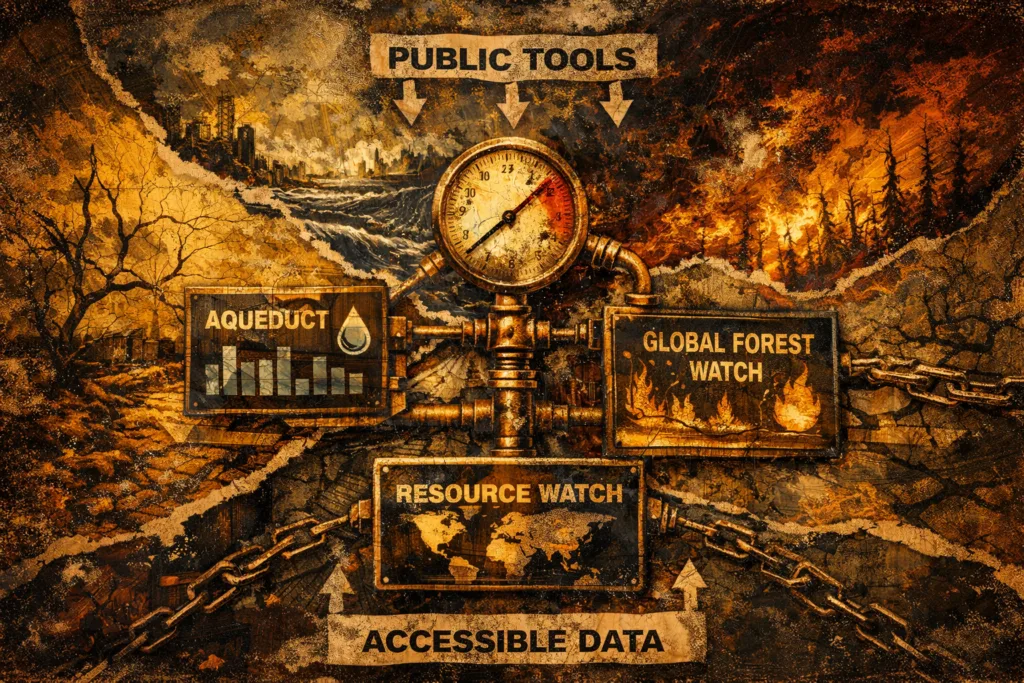
Aqueduct, Global Forest Watch, and Resource Watch are three of its best-known tools. They matter because they let you investigate water risk, forest loss, and wider environmental pressure without needing private systems or specialist gatekeepers.
Because its data and platforms are publicly accessible and built for application. Journalists, teachers, planners, nonprofit teams, and students can use them to report, teach, compare risks, and explain what is actually changing.
Because broad awareness without evidence gets ignored or manipulated. WRI’s tools help you move from general alarm to specific proof about where risk is, how severe it is, and how it is changing.
It does not stop at explanation. It builds usable tools, open data, and decision support that make linked crises harder to hide and easier to investigate.
The World Resources Institute matters because broken systems do not fix themselves and people should not pay for that failure forever
Start with Aqueduct, Global Forest Watch, or Resource Watch and stop letting vague institutional language stand in for evidence that is already public.