
The Marine Mammal Center and the Bigger Story Communities Shared About Ocean Health
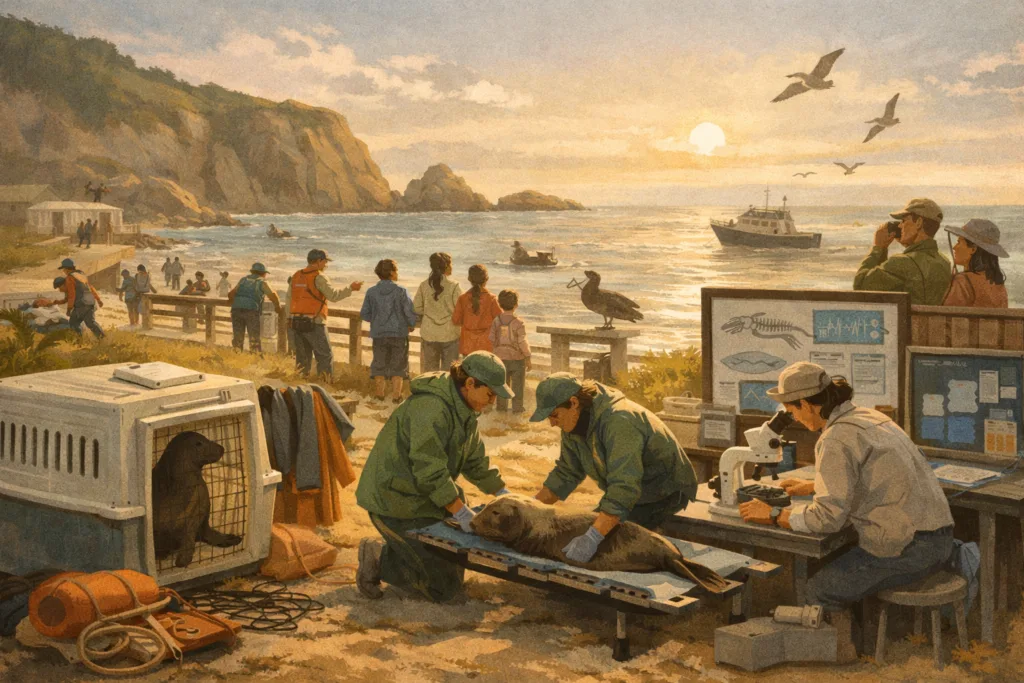
Along the California coast and across Hawaii, The Marine Mammal Center had come to represent more than a hospital for animals in distress. Its work had unfolded inside a larger shared story, where a stranded seal or sea lion often drew together responders, researchers, families on the shore, and neighbors trying to understand what had gone wrong in the water around them. What looked like one emergency had often carried a wider message. In that message, ocean health, public health, and community memory had met in one small circle around one vulnerable animal.
In this article
- How The Marine Mammal Center had turned one stranded animal into a larger ocean health story
- How rescue and rehabilitation had moved through trained hands, shared worry, and careful release
- How research and education had helped families and communities understand what the animals had been showing
- How The Marine Mammal Center in Hawaii had joined the long recovery story of the Hawaiian monk seal
The Marine Mammal Center had described its mission in a way that linked rescue and rehabilitation, research, and education as parts of one system. That language had mattered because it had refused to treat a rescued animal as only a patient. A sea lion brought in weak and shaking, or a seal pup found alone on the beach, had often become part of a larger account about pollution, climate stress, disease, food shortages, human disturbance, or shifting conditions in the sea. The animal had needed immediate care, but the moment had also asked a wider question about what the ocean had been enduring.
NOAA Fisheries had framed marine mammal strandings in much the same way, treating them as part of a national response and monitoring network rather than as random wildlife episodes. That national frame had given public shape to something many coastal communities had already felt. When a marine mammal stranded, the event had not belonged only to that one animal. It had also belonged to a coastline, a food web, a group of responders, and a public trying to learn how one visible crisis could reflect deeper strain below the surface.
This story had made The Marine Mammal Center especially memorable. The organization had not built its identity around rescue alone, even though rescue had been the most visible part of the work. Instead, it had shown how rescue opened the door to research, how research shaped education, and how education helped communities behave more carefully the next time another animal came ashore. In that cycle, one life had often helped protect many more, and the meaning of care had widened from one patient to the health of the ocean itself.
The Marine Mammal Center and the ocean story that had gathered people, science, and care together
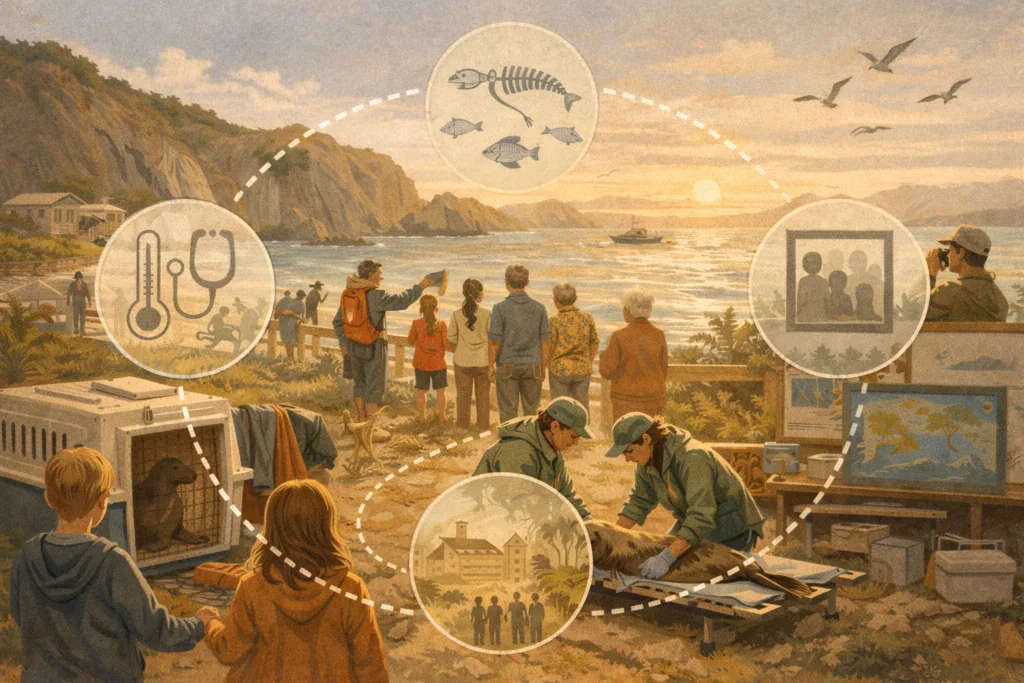
The Center’s work had been easiest to understand when it was seen as a human and ecological story at once. Each rescue had begun with one animal in trouble, yet the full picture had almost always included trained responders, worried observers, long records of past strandings, and a wider marine system under pressure. That combination had given the organization its distinct place in public life. It had saved animals, but it had also helped communities read the sea.
How The Marine Mammal Center had turned one stranded animal into a larger ocean health story
The Marine Mammal Center had presented itself as more than a wildlife hospital, and that distinction had shaped everything else about its public meaning. Its mission had stated that it advanced ocean health through marine mammal rescue and rehabilitation, research, and education. Those were not separate departments placed beside one another for convenience. They had worked more like chapters in one continuous story, where the first chapter often began with a single stranded animal and the next chapters widened into science, public understanding, and conservation.
That framing had changed the way people could understand a patient. A rescued sea lion had not simply been one animal needing treatment. It had often also been a warning sign, a source of evidence, and a clue about larger change unfolding offshore. The animal’s condition could have reflected harmful algal blooms, infectious disease, plastic exposure, food stress, vessel strikes, entanglement, or another disruption moving through the ecosystem. In that sense, the patient had arrived carrying both injury and information.
The organization’s long history had strengthened that story. The Center had traced its work back to 1975 and had described itself as the world’s largest marine mammal hospital. That history had offered more than institutional credibility. It had given the Center memory, and memory had mattered because patterns rarely revealed themselves all at once. One stranded seal might have looked isolated, but years of case records, field responses, lab findings, and community reports had allowed staff and volunteers to see when isolated events had started to become a larger trend.
For many families, neighbors, and beach visitors, that had been the most shareable insight of all. Saving one animal had mattered deeply, but learning from that animal had often mattered just as much for the next rescue and the next season. The Marine Mammal Center had built its work around that widening circle of meaning. Care began with one life, but it rarely ended there.
How rescue and rehabilitation had moved through trained hands, shared worry, and careful release
The Center had organized a patient’s path around rescue, rehabilitation, release, and research. On paper, the sequence had sounded direct and orderly. In practice, it had depended on trained response, veterinary judgment, federal coordination, and repeated small decisions made under pressure. NOAA’s stranding network had authorized trained organizations to assess distressed marine mammals, determine whether intervention had been necessary, and document what those cases had revealed. The public had usually entered the story at the beginning, through a report, and then had stepped back so the specialists could work.
In 2024, The Marine Mammal Center had rescued 941 marine mammals, or roughly two to three animals each day across the year. That number had made the pace of the work easier to imagine. Rescue had not been occasional or symbolic. It had been steady, repetitive, and operationally demanding, with each case arriving through its own mix of uncertainty, urgency, and guarded hope. Behind every annual total there had been individual animals, individual responders, and many repeated moments of concern.
Once an animal had been admitted, rehabilitation had focused on returning that patient to the wild whenever possible. The goal had not been permanent care or public display. It had been stabilization, treatment, recovery of strength, and restoration of enough function for survival after release. Depending on the case, that might have meant treatment for trauma, structured feeding plans, monitoring for toxins such as domoic acid, or care for orphaned young animals that had been separated from their mothers.
Even in those clinical moments, the Center had continued to gather a broader picture of ocean conditions. A cluster of similar symptoms had sometimes pointed toward a harmful algal bloom. Repeated injuries had exposed human-caused threats. A rise in malnourished pups had suggested prey scarcity and strain in the surrounding food web. Rehabilitation had therefore carried a dual character. It had been a place of healing for the individual animal, and it had also been a place where the sea left traces that staff could read.
There had also been a social texture to the work that made it more than a medical process. A rescuer lifting a weakened pup from the shore, a veterinarian checking small improvements day after day, and a family later hearing that an animal had been released had all occupied different parts of the same narrative. The Center’s work had stayed with people because it had connected science with care and numbers with feeling.
How research and education had helped families and communities understand what the animals had been showing
The Marine Mammal Center had repeatedly returned to one central idea: rescue alone had not solved the problem. Rescue had addressed the immediate emergency, but research had turned one case into a pattern, and education had helped communities prevent at least some harms from happening again. That broader logic had aligned with NOAA Fisheries, which had described marine mammals as indicators of ocean health. These animals had lived where climate pressure, pollution, disease, and human activity often met, so their suffering had sometimes revealed wider trouble before other signals became visible.
Research had given structure to those warnings. Through long-term case records, disease analysis, toxin studies, mortality trends, and field observation, a single event could be placed inside a more complete environmental account. What first looked like one distressed animal on one beach had sometimes later belonged to a pattern stretching across seasons, coastlines, and species. That transition from episode to pattern had been one of the Center’s most important contributions to ocean health.
Education had then carried those findings back into everyday life. The Center had advised beachgoers to remain at least 150 feet away from marine mammals, or about half a football field. That distance guidance had mattered because an animal that appeared calm could actually have been exhausted, sick, stressed, or using valuable energy merely to rest. A respectful gap between people and wildlife had therefore become one small act of shared care, shaped by science and practiced through public behavior.
The numbers from 2024 had also shown how seriously the Center had treated that public role. The organization had reported that it inspired more than 5,800 students and teachers through formal education programs and trained more than 1,000 participants through climate communication efforts. Those figures had suggested more than outreach volume. They had shown a widening network of students, educators, neighbors, and local communities learning how marine mammal health and human choices had remained connected.
Over time, that kind of learning had accumulated social value. Better-informed communities had been more likely to report animals correctly, less likely to disturb them, and more likely to understand why one stranding might have reflected a larger environmental story. Education, then, had not stood outside rescue and research. It had carried their meaning forward into the lives of ordinary people and into the habits of coastal communities.
How The Marine Mammal Center in Hawaii had joined the long recovery story of the Hawaiian monk seal
The Center’s Hawaii work had made its broader conservation role especially clear. In California, many people had first encountered the organization through sea lion rescues, hotline guidance, and visible hospital care. In Hawaii, the frame had shifted toward species recovery over time. The Marine Mammal Center had stated that it was the lead responder for Hawaiian monk seals on Hawaii Island and that it operated Ke Kai Ola, its hospital and conservation program for this endangered species. That setting had made the Center’s larger model easier to see.
The Hawaiian monk seal had remained one of the most endangered seal species in the world, according to NOAA. Although the population had been increasing, it had still stood at only about one-third of its historic size. That fact had given the recovery story a mixed emotional weight. There had been progress, and there had also been fragility. Hope had been real, but worry had remained part of the picture.
One statistic had made the scale of intervention especially clear: nearly 30 percent of the roughly 1,600 Hawaiian monk seals alive today had been alive because of NOAA and partner conservation efforts, including work by The Marine Mammal Center. That number had been unusually memorable because it had not required a chart to be understood. Conservation had not been a background activity touching the species only at the margins. It had been woven directly into the survival of the current population.
Ke Kai Ola had shown how that work had unfolded on the ground. Emergency response, veterinary treatment, outreach to beachgoers, community education, and safer behavior around fishing gear had all formed part of the same recovery effort. A monk seal resting on a beach had often depended not only on responders and veterinarians, but also on the patience of nearby people and the strength of community cooperation.
In Hawaii, the Center’s larger philosophy had become especially visible. Animal care had opened the door, but the deeper aim had been lasting conservation grounded in science, public understanding, and repeated acts of social responsibility. The story had never belonged to the seal alone. It had belonged to the people who responded, the communities who learned, and the long recovery effort carried forward together.
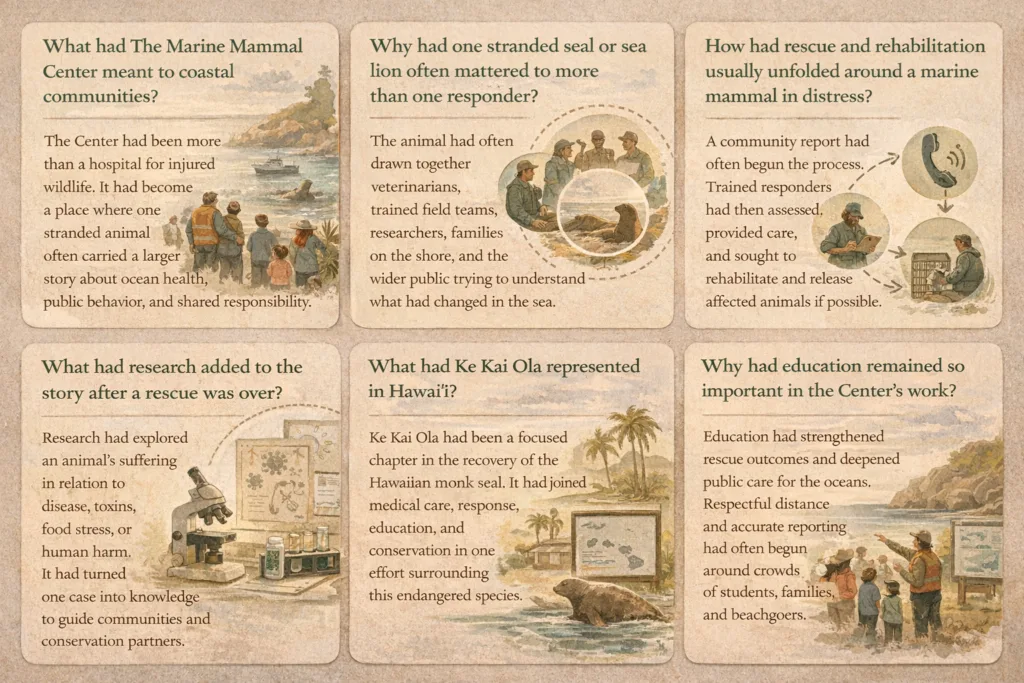
The Marine Mammal Center had meant more than a hospital for injured wildlife. It had become a place where communities could see how one stranded animal often carried a larger story about ocean health, public behavior, and shared responsibility.
That one animal had often drawn together veterinarians, trained field teams, researchers, families on the shore, and a wider public trying to understand what had changed in the sea. In that way, one rescue had frequently become a collective moment of learning.
A community report had often begun the process, and trained responders had then assessed whether intervention had been needed. From there, veterinary care, rehabilitation, and possible release had moved forward through careful decisions and close observation.
Research had helped staff place one animal’s suffering inside a larger pattern involving disease, toxins, food stress, or human-caused harm. It had turned a single event into knowledge that communities and conservation partners could carry forward.
Ke Kai Ola had represented a focused chapter in the recovery story of the Hawaiian monk seal. It had joined medical care, response, education, and conservation into one long effort surrounding one of the world’s most endangered seals.
Education had helped families, students, beachgoers, and neighbors understand how respectful distance and accurate reporting could reduce harm. Over time, that shared understanding had strengthened rescue outcomes and deepened public care for ocean health.
The Marine Mammal Center and the ocean signals communities had learned to read together
The Marine Mammal Center’s reporting pages, hotline information, and wildlife distance guidance had remained part of the quiet shared habits through which coastal communities cared for marine mammals and the sea around them.